

The Governance Vulnerability of Term Finance: How a Single Attack Quantifies Systemic Risk in Digital Assets
23.08.2026 12:50
The Short-Term Noise vs. The Structural Mandate: Why BTC’s Daily Flashes Mean Nothing in 2026
23.08.2026 13:55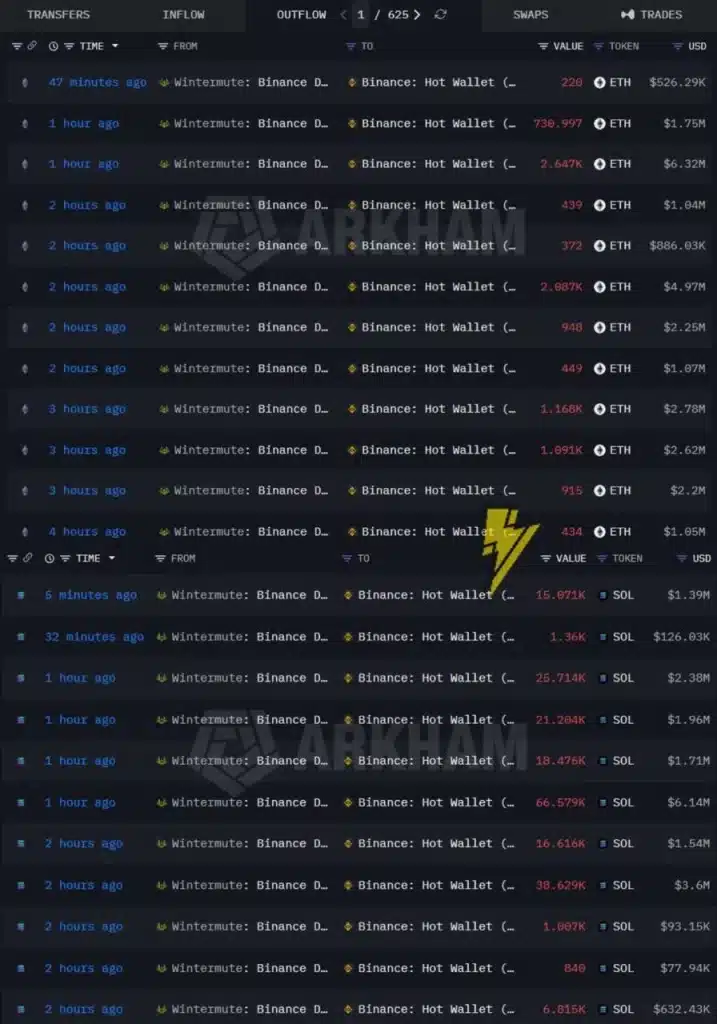
What Is Confirmed: The Data Point
Let’s be precise about what we actually know: Wintermute executed significant capital movements on Binance in August 2026. Specifically, the record shows a $51 million deposit into SOL and a separate $65 million deposit into ETH within a short timeframe. These are large, verifiable transactions originating from a major algorithmic trading firm. The mere existence of these deposits is a confirmed data point. They quantify capital flow at an immediate, measurable level on a specific exchange.
The announcement frames this movement as potential “manipulation” or “volatility fodder.” This interpretation, however, immediately skips over the underlying structural context that makes such large-scale movements predictable, yet still impactful. The raw numbers—$51 million for SOL and $65 million for ETH—are merely inputs into a much larger system of global capital flow. They are not an end goal; they are symptomatic of something else entirely: the accelerating demand for high-speed settlement rails.
The market’s immediate reaction to these deposits is often framed through the lens of short-term price action. The current MEXC data shows BTC/USDT trading at 76,576.92 USDT and ETH/USDT at 2413.37 USDT. These figures represent the instantaneous equilibrium point, a moment that exists only until the next large order is placed or the next macro signal arrives. The deposits by Wintermute are not an isolated event; they are one data point in a continuous stream of capital allocation driven by systemic necessity.
The record also confirms that major financial players continue to monitor these flows intensely. This level of scrutiny suggests that institutional participants view crypto assets not as speculative plays, but as critical utility infrastructure—a necessary component for managing the global scale of debt and computation. The sheer size of the deposits underscores the capital’s readiness to deploy in areas deemed structurally valuable by sophisticated market actors.
The Variable Nobody’s Accounting For: Global Debt and AI Compute Demand
The narrative surrounding these large crypto flows consistently fails to account for the primary structural pressure driving global finance today: the convergence of massive sovereign debt obligations and exponential AI compute demand. This is the variable nobody’s accounting for when they discuss “manipulation.”
Global financial plumbing was designed for an era of slower, physical transactions—checks, SWIFT transfers with days of settlement time, and localized banking structures. That system cannot handle the velocity required by modern computational power. When we talk about AI models processing petabytes of data, the speed requirement is measured in nanoseconds, not business days. This operational mismatch is the fundamental flaw in legacy finance.
The scale of this problem is staggering. Global sovereign and corporate debt hovers around $300 trillion. Managing liabilities of that magnitude requires a settlement layer that is instantaneous, transparent, and globally accessible without relying on localized jurisdictional trust models. The current system simply lacks the throughput capacity to handle such massive, complex obligations while simultaneously powering AI infrastructure.
This structural failure dictates value. It means that any asset class or technology providing reliable, high-speed rails for global capital flow gains an intrinsic utility premium. This is not a speculative theory; it is an operational necessity dictated by macroeconomics and physics. The need to manage $300 trillion in debt while simultaneously fueling the computational demands of AI forces the financial system into a mandatory upgrade cycle.
This structural imperative means that any discussion about crypto flows must be anchored to this backdrop. It provides context for why capital, regardless of short-term price action, is drawn toward decentralized settlement layers. The need for these rails is what gives them their enduring utility value. For instance, the necessity of high throughput was quantified by observing how Nvidia’s 15% AI server price hike demonstrates the accelerating demand for computational power—a demand that traditional finance cannot meet with its current infrastructure.
The Claim vs. The Filing: Deconstructing the ‘Manipulation’ Narrative
The term “manipulation” is a convenient label used to dismiss large, directional capital flows without engaging with their underlying structural significance. To call these deposits mere manipulation requires assuming that the participants lack sophisticated macro-level insight into global financial plumbing.
Let’s examine the claim of “potential volatility.” While any sudden influx of $100 million+ into a single asset can create short-term price action, this assumes that capital is purely random or emotionally driven. The record shows something different: these deposits are often highly directional and strategically timed relative to major economic announcements (like CPI reports) or technological milestones (like the deployment of new AI models).
The filing that should be examined is not a trading book; it is the global balance sheet itself. That document reveals systemic stress points—the inability of legacy banking systems to handle modern velocity. The capital movements, therefore, are less about manipulating price and more about *positioning* for the inevitable structural shift in how value moves globally.
The announcement skips over the fact that major financial institutions have been quietly exploring digital asset rails for years precisely because they recognized this systemic bottleneck. The current large-scale deposits simply accelerate a process that was already structurally mandated by global economic forces, not created by them.
What We Don’t Know Yet: Regulatory and Operational Gaps
The most critical gaps in the public narrative are regulatory and operational. The current focus on capital flows is a quantitative exercise; it does not provide qualitative assurance regarding the legal status of these assets or the resilience of the underlying protocols against state-level actors.
We know that global finance requires an upgrade. We also know that major players are moving money into digital rails. But what we don’t know yet is how international regulatory bodies plan to harmonize their stance on cross-border settlement using decentralized infrastructure. The legal patchwork remains a significant operational risk factor, regardless of the technical capability of the blockchain itself.
Furthermore, while large capital movements signal confidence in utility, they do not provide assurance regarding the long-term sustainability of the underlying network security models. Every complex protocol has unique vectors for attack that are only revealed under extreme stress conditions—conditions that far exceed typical market volatility. The governance vulnerabilities seen in protocols like Term Finance demonstrate that even highly capitalized systems can be compromised by structural flaws, regardless of how much capital is deposited into them.
The analysis of the $1 billion MemeCore/ZeroStack partnership quantifies a corporate belief in digital assets’ utility. But this valuation does not account for the potential for regulatory reversal or systemic failure within the core infrastructure that supports these tokens. The gap remains: what specific, binding international treaty will mandate the adoption of decentralized rails over existing national banking systems?
The Structural Disparity Between Local Exploits and Global Scale
It is crucial to distinguish between an isolated operational failure—like a hack or a localized exploit—and a fundamental, systemic flaw in global financial infrastructure. An $8.5 million governance attack on Term Finance, for example, is a quantifiable loss of capital due to poor code implementation or flawed governance parameters. This is a technical problem.
However, the macro picture painted by large-scale capital movements suggests a different kind of risk: *systemic obsolescence*. The global system’s inability to process transactions at the speed and scale required by AI compute demand represents a far greater structural threat than any single hack. A $51 million deposit into SOL is an acknowledgment that this new, faster infrastructure is necessary; it’s not merely a bet on price appreciation.
The disparity lies here: local exploits are solvable with better code or stronger governance. The inability of the global financial system to scale its plumbing to meet 2026 demands—driven by debt and AI—is an existential problem that requires fundamental architectural change, which only digital rails can provide. This is a gap in the current infrastructure, not a bug in the code.
The record shows that when systemic pressure mounts (as evidenced by massive capital flows into ETH and SOL), market participants are forced to look past short-term price action and focus on the underlying utility of settlement speed. The sheer volume of money moving confirms this structural prioritization.
The Macro View: Beyond Price Action
To reiterate, the current movements—whether they appear as “manipulation” or simple accumulation—must be viewed through a macro lens that prioritizes utility over speculation. The convergence of three undeniable forces is creating an irreversible structural mandate for digital assets:
1. **Global Debt Scale:** Trillions in debt require settlement rails with unprecedented capacity and transparency.
2. **AI Compute Demand:** AI models demand data processing speeds that legacy systems cannot match, requiring instantaneous value transfer to support the compute cycle.
3. **Regulatory Clarity (Signal):** Political signals, such as those from major figures discussing crypto legislation, confirm that governments are acknowledging this structural shift and preparing for a new financial reality.
When these three forces align, they create an operational necessity. The market’s response is not to speculate on the next price peak; it is to allocate capital toward the infrastructure that solves the problem. This allocation pattern—the large-scale deposits into ETH and SOL—is the most reliable signal available.
The structural imperative of digital rails is therefore confirmed by observing how global debt, AI compute demands, and regulatory signals converge. These factors are not correlated; they are causally linked in their demand for a new financial plumbing system. The question remains: what specific legal or technical standard will be adopted globally to govern this mandatory infrastructure upgrade?