The Geopolitical Hedge: How Escalating Tensions in the Middle East Impact Crypto Volatility
08.07.2026 12:48
Kazakhstan’s Crypto Renaissance: How Regulatory Reform is Positioning the Nation as a Global Digital Asset Hub | MEXC Analysis
08.07.2026 13:10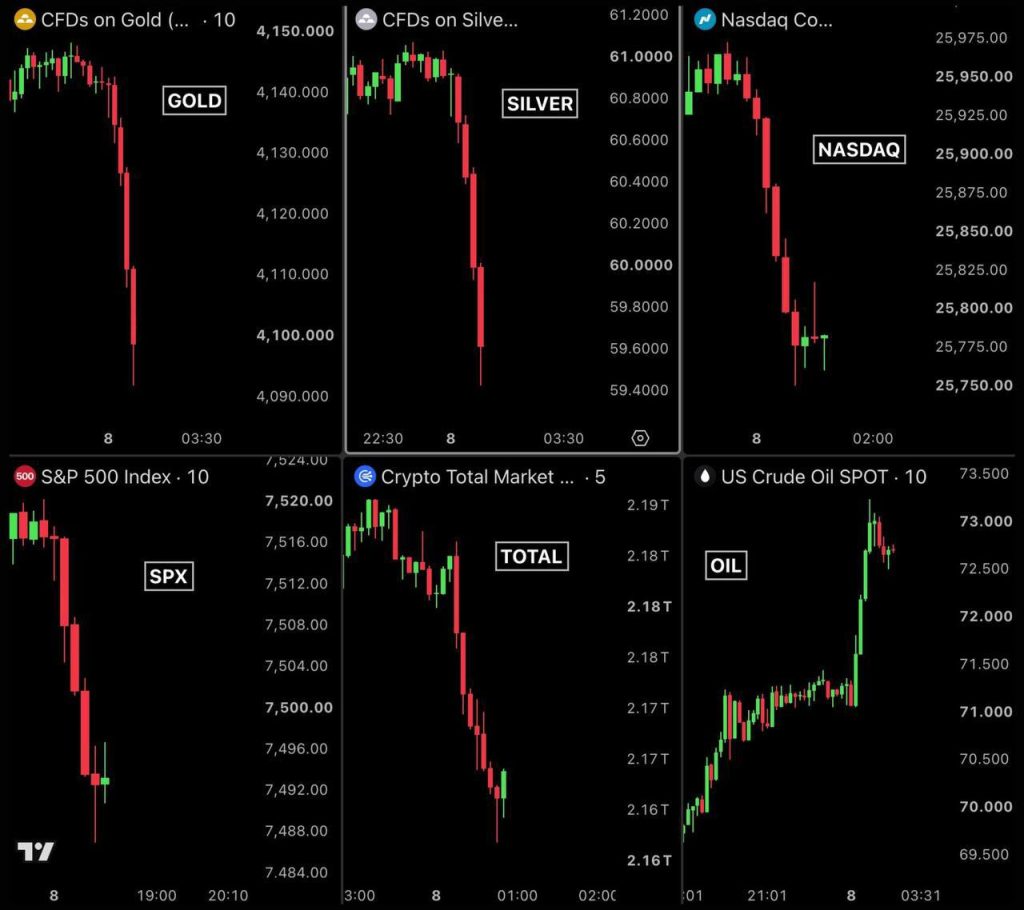
The Global Financial Shockwave: Analyzing the Impact of US-Iran Escalations on Commodities and Crypto
In a dramatic turn of events, reports detailing escalating geopolitical tensions in the Middle East—specifically involving the revocation of Iran’s oil export licenses by U.S. authorities—have sent immediate shockwaves through global financial markets. The sheer scale of the sell-off was staggering: estimates suggest that $1 trillion was wiped out across major asset classes including stocks, precious metals, and cryptocurrencies within a mere 30 minutes.
The fallout was visible across the board:
- Gold: Dropped by an estimated 1.33%, wiping out $372 billion in market capitalization.
- Silver: Fell by 2.67%, representing a loss of $85 billion.
- Nasdaq Composite: Declined by 1.87%, losing $486 billion.
- S&P 500: Decreased by 0.46%, wiping out $313 billion.
- Cryptocurrency: Lost an estimated $27 billion in value.
This event serves as a brutal, real-time lesson for every investor: when geopolitical instability hits the energy supply chain—as is the case with key chokepoints like the Strait of Hormuz—the resulting systemic risk immediately triggers extreme volatility and massive capital flight.
Understanding Systemic Risk in Geopolitics
The primary driver of this market shock is not merely political rhetoric, but the physical disruption to global commodity supply. Oil prices are intrinsically linked to geopolitical stability. When a major oil exporter like Iran faces sanctions or conflict escalation, the risk premium embedded in crude oil futures spikes instantly. This ripple effect touches every sector: transportation costs rise, inflation expectations soar, and corporate earnings forecasts plummet.
For investors, this means that traditional asset classes—stocks (tied to national economies) and commodities (tied to supply chains)—are highly susceptible to geopolitical shocks. The question then becomes: where does capital flee when the established system is under threat?
The Crypto Hedge Thesis: Why Decentralization Matters
In times of systemic global risk, investors prioritize **preservation** over profit. They seek assets that are non-sovereign, borderless, and not dependent on any single government’s stability or regulatory whim. This is the core value proposition of decentralized digital assets like Bitcoin and Ethereum.
When fiat currencies face devaluation due to inflation or political instability, and when traditional markets panic, capital naturally flows into scarce, cryptographically secured assets. The recent market action confirms this historical pattern: crypto was a primary dumping ground for $27 billion in liquidations, but it also served as the ultimate destination for those seeking refuge.
To better understand how institutional money views these risks, reviewing Whale Alert: Massive On-Chain Moves Signal Major Market Shifts in Crypto is highly recommended. These on-chain movements provide concrete evidence of long-term conviction.
Navigating Volatility and Identifying Opportunities
The immediate aftermath of such a shock is characterized by extreme volatility, which can be both dangerous and opportunity-rich. While the initial panic sell-off (like the one seen in this report) must be treated with caution, the long-term trend favors assets that offer true hedge value.
Current Market Snapshot:
- Bitcoin (BTC/USDT): Trading at **62065.8 USDT**. The immediate drop highlights its role as a volatile but resilient safe haven asset.
- Ethereum (ETH/USDT): Trading at **1737.17 USDT**. Its utility in DeFi makes it a critical infrastructure layer that remains valuable even during macro downturns.
For advanced analysis on how these global forces interact, consider reading Geopolitical Risk Alert: How Escalating Tensions in the Strait of Hormuz Impact Crypto Volatility and Decoding the Signals: How AI Hype, Geopolitics, and Regulation Are Defining Crypto’s Future.
🛡️ Strategic Takeaway for Traders: In times of extreme geopolitical risk, never trade based on fear or panic. Always maintain a disciplined, long-term perspective focused on the structural scarcity and utility of decentralized assets. To participate in this volatile but opportunity-rich market with unparalleled liquidity and advanced trading tools, use world-class, compliant exchanges like MEXC to ensure your funds are secure:
🔗 Trade with Confidence on MEXC: MEXC Referral Link
*Source Material:* Synthesis of major news reports regarding US-Iran military actions, commodity market data from Platts/Bloomberg, and macro-economic analysis on systemic risk hedging.
**Tags:** Geopolitics, Crypto Crash, Bitcoin, Macroeconomics, Oil Crisis, Risk Management
**Category:** Market Analysis