JPMorgan’s Jamie Dimon Warns Against US Bonds and S&P 500 Amid Economic Uncertainty
24.07.2026 10:30
When Desperation Drives a Bored Ape Sale
24.07.2026 11:07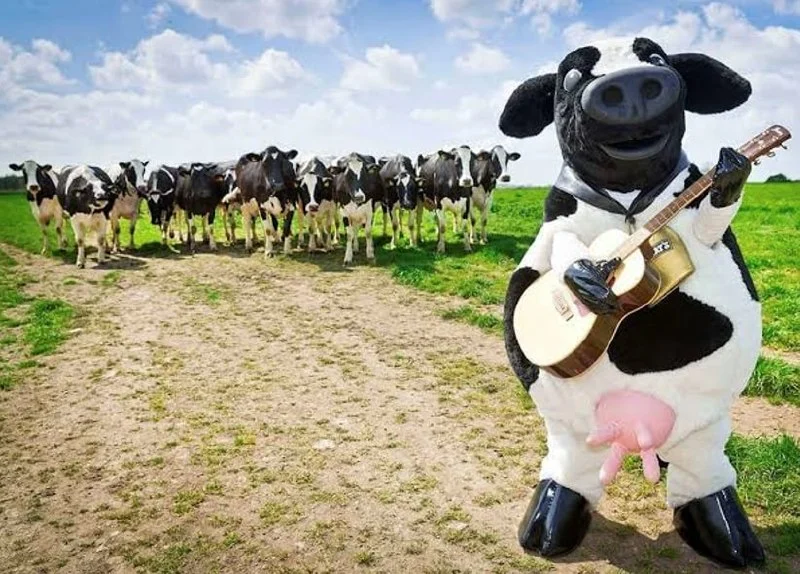
Tokenizing Cows: Brazil Turns Livestock into Digital Assets
Unpacking the First-of-Its-Kind Tokenization
The recent buzz around a Brazilian farm’s digital leap forward is more than just a curious anecdote. The farm, reportedly securing a loan of nearly $20,000 by using ten tokenized cows as collateral, marks a groundbreaking shift. The focus lies on how these cows, equipped with smart collars, are now visible to banks in real time, adding a new dimension to asset-backed securities.
To be precise, what we know from the original report is that this innovation isn’t limited to the digital visibility of the livestock. It’s also a comment on market evolution that facilitates transparency and security. But, what has yet to be confirmed is the scalability of this pilot project. Thus, skepticism remains warranted until more operations prove the model’s durability.
Breakdown of a Digital Asset in Agriculture
The concept of turning cows into digital assets is compelling, but it’s not unprecedented. Livestock being transformed into collateral is akin to other esoteric assets. For example, blockchain has been employed in industries like art and real estate. However, what separates tokenized cows is the dual functionality: monitoring both the health and location of the livestock in real time. The integration of IoT (Internet of Things) and blockchain technology is a potent mix.
Still, caution is justified. Let’s be precise about what we actually know: banks rely heavily on data verification, yet there are gaps. This deployment assumes the smart collars’ data is flawless. But this hasn’t been independently verified. Until such vetting occurs, traditional skepticism dictates that we thread carefully about its broader implications.
The Record, Actually: Historical Context of Tokenization
Historically, the concept of leveraging livestock, particularly cows, is far from new. In agricultural economies, livestock has often served as a guarantee for loans and trade. With tokenization, the innovation lies more in technology than in the concept itself.
This isn’t the first attempt to tokenize unconventional assets. Take the recent example of tokenized cows in Brazil. What sets Brazil’s step apart is the practical application within a regulated exchange. Yet, challenges loomed even here with variable market acceptance and uncertainty in untested legal frameworks.
The Variable Nobody’s Accounting For
The market view is often obscured by the futuristic charm of blockchain. However, the record shows something different. Just consider the inherent risks of such digital transformations. If the technology fails, the collateral evaporates. Who bears this risk? The announcement skips over the fact that regulatory structures aren’t fully equipped for such scenarios.
What’s also skipped is the potential for data misuse. Given the open-ended nature of blockchain, privacy concerns are pertinent. Until these loopholes are addressed, it remains a speculative endeavor.
Claims Versus Regulatory Filings
Every claim of technological advancement by companies must be weighed against documented filings. Here, the regulatory body overseeing this operation is Brazil’s B3. The exchange has historically backed financial innovations, yet this specific application towards livestock remains on trial rather than established practice.
Contrary to some enthusiastic endorsements, caution is key. As documented in various exchanges, like in other tokenization attempts, the happiest path often conceals statistical outliers that could undermine trust or execution.
Market Ramifications and Implications
Tokenized cows might seem distant from the typical crypto enthusiast’s portfolio, but they underscore a more significant evolution in digital finance. Here’s why: this development mirrors broader trends, where non-traditional assets leverage blockchain for transparency.
Expectations are mixed, though. On one hand, they’re noted as a potential safe haven—or as some would say, untapped—a refuge in uncertain economic climates, similar to what we’ve seen when grid bots outperform futures in volatile markets. On the other, limitations in regulation and execution present formidable obstacles.
The Unanswered Question
What’s truly missing from the narrative is the critical element of independent verification — who verifies the real-time data emission? Can the smart collar’s metrics be hacked, manipulated, or misrepresented? On-chain data remains concealed and susceptible to tampering.
Until transparency reaches full circle, this remains another intriguing, yet cautious step in a long digital journey. What the announcement still doesn’t explain is who audited the reserve figures — and when.
Author: Betty Coleman