

Uniswap’s Potential Expansion of UNI Token Burn Mechanism: Implications for Investors
18.07.2026 00:47
JPMorgan’s Insights on Bitcoin: Implications for the Future of BTC
18.07.2026 01:13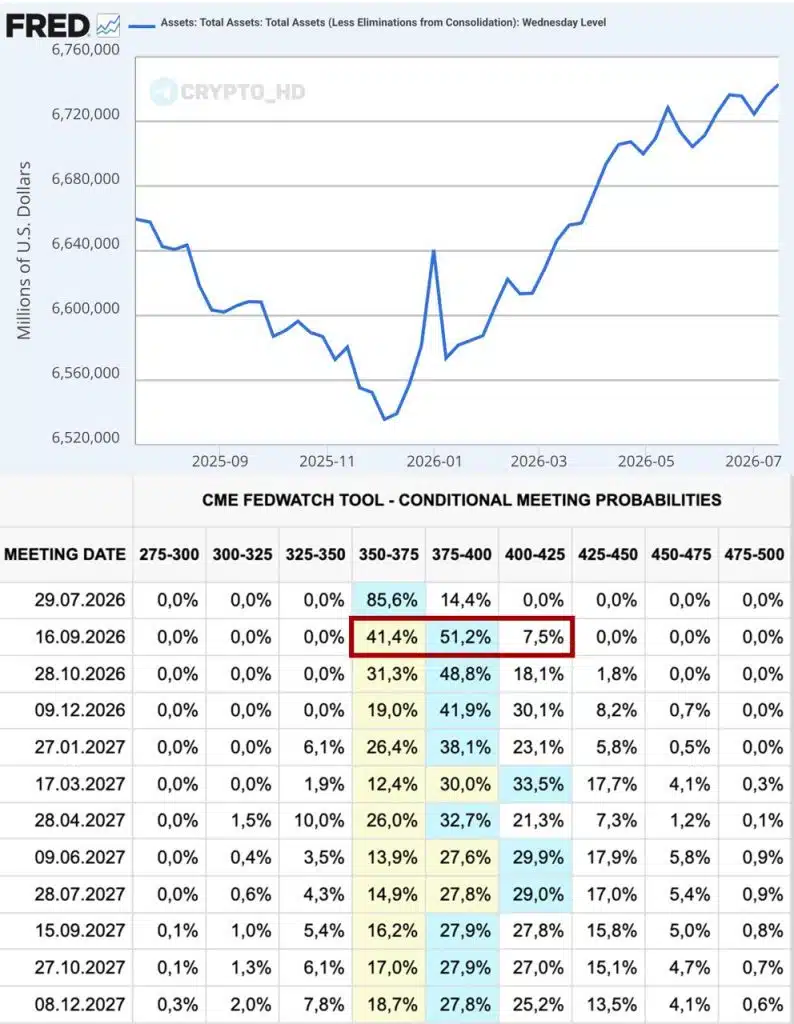
The Federal Reserve’s Recent Balance Sheet Expansion: Implications and Insights
Background and Context
The Federal Reserve (Fed) has recently reported a significant increase in its balance sheet, amounting to $7.419 billion in just one week. This expansion comes amidst ongoing discussions surrounding inflation control in the United States. The Fed’s actions are pivotal, as they directly influence monetary policy, interest rates, and ultimately, the broader economy. Understanding the mechanics behind this balance sheet growth and the statements from key Fed officials provides critical insights for traders and investors alike.
As inflation rates remain a key concern, the Fed’s approach continues to evolve. Officials such as Christopher Waller, John Williams, and Lorie Logan have offered varying perspectives on the necessity of interest rate adjustments and the overall monetary policy stance. Historically, the Fed has utilized its balance sheet as a tool to manage economic conditions, especially during periods of financial instability. This latest development requires a close examination of its implications for the future of monetary policy and market dynamics.
Key Data and Metrics
According to the Fed’s balance sheet data, the total assets have seen fluctuations based on the economic conditions and policy responses. The recent jump of $7.419 billion highlights a proactive stance by the Fed to address potential economic risks. Current inflation rates hover around 4%, down from peaks observed in previous years, indicating that while progress has been made, challenges remain.
Waller’s assertion that inflation can potentially return to the 2% target without further rate hikes is both optimistic and indicative of confidence in the Fed’s current tools. However, the acknowledgment of a scenario requiring a more stringent monetary policy reflects a cautious approach, emphasizing the need for continuous monitoring of economic indicators. The market’s expectations for the upcoming Federal Open Market Committee (FOMC) meetings, particularly the anticipated pause on July 29 and a potential 25 basis point hike in September, further illustrate the delicate balance the Fed must navigate.
Market Analysis
The implications of the Fed’s balance sheet expansion are profound, particularly for market participants. An increase in the balance sheet often means that the Fed is injecting liquidity into the economy, which can have various effects on asset prices, interest rates, and investor sentiment. For instance, a more accommodative stance could bolster equity markets, while a tightening approach may lead to increased volatility.
Moreover, the Fed’s decision-making process is closely scrutinized by market analysts. The contrasting views of Waller, Williams, and Logan underscore the uncertainty surrounding inflation trajectories and the impact on future monetary policy. Investors must remain vigilant, as shifts in Fed policy can directly affect market dynamics. As seen in the volatility during the Covid-19 pandemic, rapid changes in monetary policy can lead to significant market movements.
Expert Perspectives
Experts in the field emphasize the need for a comprehensive understanding of the Fed’s actions and the broader economic context. The Fed’s dual mandate of promoting maximum employment and stable prices means that its decisions are often a balancing act. Analysts argue that while the goal of 2% inflation is ideal, achieving it without triggering a recession is a complex challenge.
Furthermore, the divergence in opinions among Fed officials illustrates the ongoing debate regarding the effectiveness of current monetary policy tools. Some experts advocate for a more aggressive approach to curbing inflation, while others suggest that maintaining a steady course may be more beneficial in the long run. This discourse highlights the importance of considering multiple viewpoints when assessing the Fed’s strategies.
Risks and Opportunities
As the Fed navigates these complex economic waters, several risks and opportunities arise for traders and investors. A primary concern is the potential for inflation to remain stubbornly high, necessitating more aggressive rate hikes. Such a scenario could lead to increased borrowing costs, impacting consumer spending and business investment.
Conversely, if the Fed’s strategy proves effective in controlling inflation without derailing economic growth, there may be opportunities for investors in equities and other asset classes. The balance between risk and reward will require careful analysis and a keen understanding of market signals.
Future Outlook
Looking ahead, the trajectory of the Fed’s monetary policy will play a crucial role in shaping economic conditions. With inflation forecasts suggesting a decline to approximately 3.25% by the end of the year and reaching the 2% target by 2028, the Fed faces the challenge of aligning its policy tools with these expectations.
Market participants should prepare for potential shifts in the interest rate environment and remain informed about the Fed’s communications. The upcoming FOMC meetings will be pivotal, as they will provide further guidance on the Fed’s outlook and policy direction. As history has shown, the Fed’s decisions can have far-reaching consequences, making it essential for investors to stay informed and adaptable.
Conclusion
The recent increase in the Federal Reserve’s balance sheet signifies a proactive approach to monetary policy amidst ongoing inflation concerns. The varying perspectives from key officials underscore the complexity of managing economic risks while striving for stability. For traders and investors, understanding the implications of these developments is crucial for navigating the ever-evolving financial landscape. As the Fed continues to assess its strategies, remaining vigilant and adaptable will be key to capitalizing on the opportunities presented by the shifting economic environment.
For more insights into market dynamics and investment strategies, explore our analysis on Uniswap’s potential and the implications of recent Bitcoin ETF outflows. Additionally, understand the broader economic implications in our piece on the US national debt and how market moves can affect various sectors. Start trading on MEXC today!