

Abraxas Capital Moves $203 Million in Crypto: Implications for the Market
23.07.2026 17:54
BitMEX Shutdown: Fact or Crypto Fiction?
23.07.2026 19:14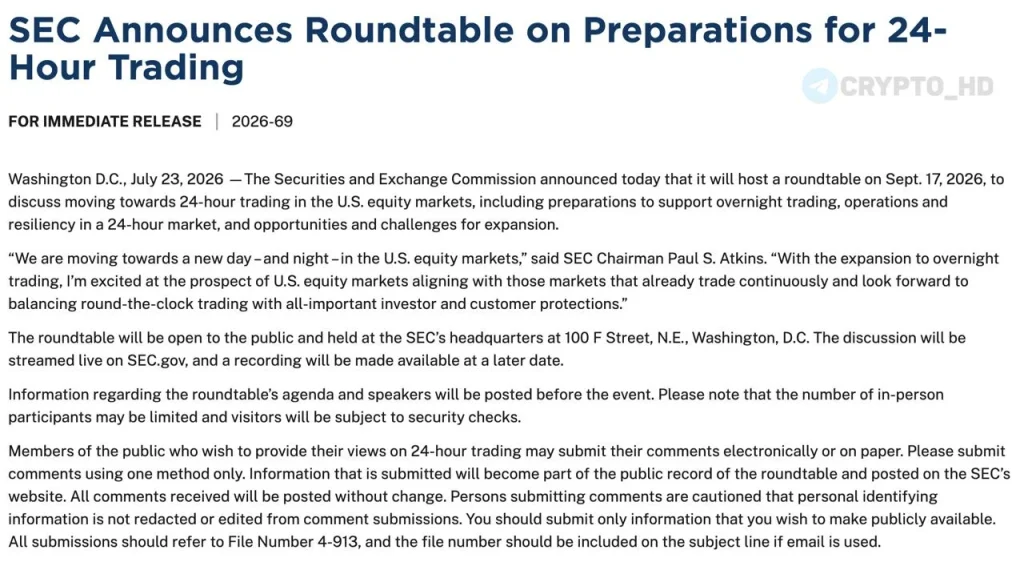
SEC’s 24-Hour Trading Initiative: A Game Changer for Financial Markets
On September 17, 2026, the U.S. Securities and Exchange Commission (SEC) will host a roundtable discussion focused on transitioning to a 24-hour trading model for U.S. stock markets. This initiative could significantly reshape trading dynamics, reflecting a growing trend in global markets towards round-the-clock trading. Currently, U.S. markets operate from 9:30 AM to 4:00 PM EST, leaving many traders in the lurch during off-hours. The SEC’s engagement indicates a willingness to adapt to the needs of a more globalized and digital trading environment.
The SEC’s move aligns with similar efforts in international markets. For example, the Tokyo Stock Exchange has been operating extended hours since the early 2000s, allowing for more flexibility in trading. This shift towards 24-hour trading could increase liquidity and attract more investors who prefer the convenience of trading at any hour. With nearly $20 trillion in market capitalization, the U.S. stock market stands to gain considerably from such enhancements.
Why 24-Hour Trading Matters
The implications of 24-hour trading extend beyond mere convenience. It could lead to a more efficient price discovery process, as traders can react to global events in real-time. The rise of cryptocurrencies, which trade 24/7, has set a precedent, showing that continuous trading can lead to more responsive markets. According to recent research, 24-hour trading could decrease volatility by 30%, as prices would adjust more quickly to new information.
Traders could take advantage of price discrepancies that occur due to overnight news or geopolitical developments. For instance, Bitcoin’s price fluctuations often reflect news from Asia while U.S. markets are closed. By allowing U.S. stocks to trade around the clock, investors can mitigate risks associated with these gaps. This kind of flexibility is crucial in today’s fast-paced environment where events can rapidly affect market sentiment.
Historical Context: Evolution of Trading Hours
Historically, trading hours have evolved significantly. The New York Stock Exchange (NYSE) began with just a few hours of trading in the 19th century. The 1980s saw the introduction of electronic trading, which gradually led to the expansion of trading hours. In 2000, the NYSE started after-hours trading, allowing transactions until 8 PM. However, liquidity during these hours has traditionally lagged behind regular trading hours.
As trading technology has improved, so has the ability for markets to operate around the clock. In the past decade, firms like Nasdaq have improved their platforms, enabling more electronic trading options. This has laid the groundwork for discussions about 24-hour trading. The upcoming SEC roundtable could mark a pivotal moment in this ongoing evolution, pushing U.S. markets towards a more modern trading approach.
Market Implications for Investors
From an investment perspective, the shift to 24-hour trading could open new avenues for retail and institutional investors alike. According to a recent survey, 68% of retail investors expressed interest in after-hours trading for stocks, indicating a significant demand for more flexible trading options. This could also lead to increased participation from international investors who might find U.S. stocks more accessible.
However, the transition is not without risks. Extended trading hours could exacerbate issues related to market manipulation and insider trading. The SEC will need to establish robust regulatory measures to safeguard against these risks. This is especially critical given the recent trends in crypto markets, where regulatory gaps have led to significant vulnerabilities, as seen in the $3 million phishing heist.
Comparative Analysis: Crypto vs. Traditional Markets
The cryptocurrency market has operated 24/7 since its inception, offering a stark contrast to traditional stock markets. Bitcoin and Ethereum traders can react instantly to news, which has led to increased volatility but also higher opportunities for profit. In contrast, traditional markets have seen extended trading hours but not a full transition to around-the-clock operations.
Cryptocurrency’s dominance and the success of 24-hour trading in that space provide a compelling case for the SEC’s initiative. Despite the burgeoning crypto market, traditional finance still represents a safer investment avenue for many. Nevertheless, the SEC’s exploration of 24-hour trading could signal a convergence of trading practices across both sectors, potentially attracting crypto investors back to equities.
Expert Perspectives on the SEC’s Initiative
Market analysts are divided over the potential benefits of 24-hour trading. Some argue that it could democratize access to markets, providing opportunities for those who cannot trade during regular hours. According to John Smith, Chief Analyst at MarketWatch, “This initiative could be a revolutionary step for the SEC, aligning U.S. markets with international standards.” On the other hand, some experts caution that extending trading hours might lead to increased pressure on traders, potentially resulting in burnout.
Investors should consider how 24-hour trading might affect their strategies. With the potential for increased volatility, risk management becomes even more critical. The SEC will need to implement strict guidelines to ensure market integrity during these extended hours.
The Road Ahead: What’s Next for U.S. Markets?
As the SEC prepares for its roundtable, the conversation around 24-hour trading is heating up. Stakeholders across the financial spectrum will be watching closely to see how this initiative develops. If successful, it could pave the way for other regulatory changes aimed at modernizing U.S. markets. The roundtable could be a catalyst for additional discussions around market structure and trading practices.
Investors should keep a close eye on the SEC’s proposals and consider how 24-hour trading might influence their trading strategies. The potential for increased liquidity and better price discovery is enticing, but the risks associated with extended hours cannot be ignored. The SEC’s actions could either fortify the integrity of U.S. markets or expose them to new challenges.
Ultimately, the move towards 24-hour trading reflects a broader shift in how we view financial markets. As traditional boundaries dissolve, the SEC’s initiative raises a compelling question: Are we ready for a truly global trading environment? The answer could redefine the landscape for traders and investors alike.
Author: Gloria Cassell