
The Deflationary Force: Analyzing Tether’s Massive USDT Burn on Ethereum and Its Impact on Crypto Stability | MEXC Analysis
07.07.2026 13:09The Bearish Signal: Decoding BTC’s Divergence and What It Means for Crypto Traders
07.07.2026 14:25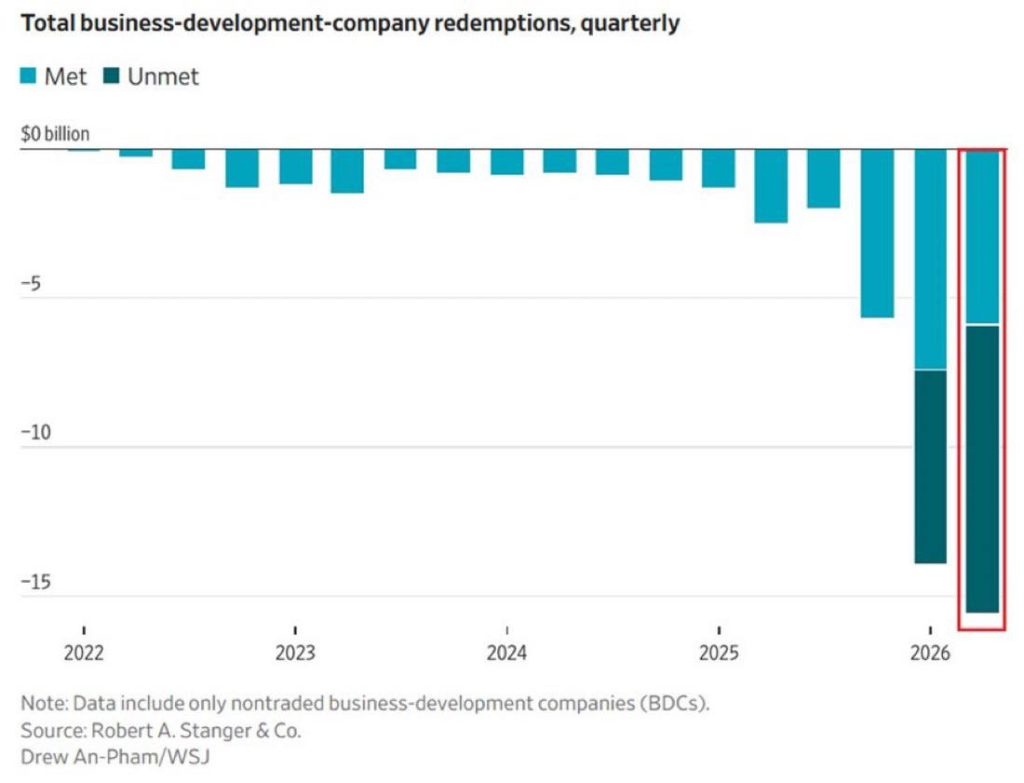
The Looming Shadow: Why Private Credit Stress Could Be the Next Global Market Warning Sign | MEXC Analysis
In the complex ecosystem of global finance, attention is often laser-focused on Bitcoin’s price action, ETF inflows, and central bank decisions. However, a significant source of systemic risk that is currently being largely ignored by the mainstream market is building up in the **Private Credit** sector—a massive pool of private lending exceeding $2 trillion. This article analyzes why this overlooked financial plumbing could become the first major warning sign for global markets, potentially impacting everything from traditional stocks to decentralized crypto assets.
Understanding Private Credit and Its Vulnerabilities
Private credit refers to loans made directly between private investors (like hedge funds or family offices) and borrowers, bypassing traditional banks. This market is highly attractive because it offers higher yields than conventional lending, especially in times of low interest rates. However, this very structure—its complexity, high leverage, and lack of transparency—is also its greatest vulnerability.
Recent data points highlight mounting stress:
- In Q1 2026, investors applied for nearly $20 billion in withdrawals.
- However, funds were only able to satisfy about 53% of those claims.
- By Q2 2026, the withdrawal requests totaled $15.6 billion, with satisfaction rates dropping even lower at just 38%.
The core problem is not merely the volume of withdrawals; it is the **deteriorating ability** of fund managers to return capital to investors quarter after quarter. If this trend continues, the backlog of delayed payments could swell dramatically by Q4 2026, creating significant systemic tension across global financial markets.
The Perfect Storm: Combining Multiple Stressors
Financial crises rarely have a single cause; they are usually the result of multiple underlying pressures converging simultaneously. The Private Credit stress acts as a powerful accelerant when combined with other macro factors:
- High Interest Rates: Elevated rates increase borrowing costs for all borrowers, tightening liquidity and making debt servicing harder.
- S&P 500 Correction Risk: After periods of strong growth, the S&P 500 is due for a natural correction, which can trigger risk-off sentiment across asset classes.
- Global Economic Slowdown: Persistent global economic uncertainty puts pressure on corporate revenues and debt repayment capacity.
When these factors—Private Credit stress, high rates, potential stock market dips, and global slowdown—align, the resulting systemic pressure could be far greater than the sum of its parts. This confluence creates a perfect storm for capital flight.
Why Private Credit is the Leading Indicator
The private credit market’s struggle to manage outflows makes it an ideal **leading indicator** for broader financial health. When money gets stuck in one sector, it doesn’t just disappear; it starts creating friction and delays that ripple outward. This initial stress often hits niche or complex markets before the mainstream indices (like S&P 500) feel the full force of the problem.
This concept is vital for crypto investors to understand. The stability of decentralized finance, while revolutionary, still relies on underlying global liquidity and institutional confidence. When traditional financial plumbing starts to clog up, it inevitably affects the capital available for digital asset adoption. For a deeper look into how major institutions view this risk/reward dynamic, review The Macro-Crypto Nexus: Decoding Institutional Moves Amid Global Economic Shifts.
Strategic Implications for Crypto Investors
For crypto traders, the Private Credit warning serves as a crucial reminder to prioritize **risk management** above all else. High volatility and systemic stress are not opportunities for reckless speculation; they demand disciplined capital preservation.
Furthermore, understanding where institutional money is flowing provides a counter-narrative to panic. While private credit struggles, major players like BlackRock continue to demonstrate conviction by accumulating assets such as BTC and ETH BlackRock’s Massive BTC & ETH Accumulation Signals Institutional Conviction. This suggests that even during systemic stress, the core value proposition of decentralized assets remains intact.
The current market snapshot shows Bitcoin trading at **63152.19 USDT**, maintaining a strong floor despite global macro warnings. The key takeaway is to remain disciplined and view these warning signs not as immediate panic triggers, but as signals for strategic portfolio adjustments—increasing your focus on risk mitigation.
Conclusion & Call to Action
The Private Credit sector’s struggles are more than just a niche financial problem; they are a potential canary in the coal mine for the entire global economy. By paying attention to these overlooked systemic risks, investors can position themselves ahead of major market shifts. To navigate this complex and evolving landscape with confidence, access to a reliable, globally connected exchange is paramount.
🔗 **Trade with Confidence on MEXC:** MEXC Referral Link
📚 Further Reading for Context:
- Understand the global forces at play: The Macro-Crypto Nexus: Decoding Institutional Moves Amid Global Economic Shifts
- Review institutional accumulation patterns: BlackRock’s Massive BTC & ETH Accumulation Signals Institutional Conviction
- Master risk management during volatile times: The Danger of Paid Crypto Trading Signals: A Guide to Risk Management