

NVIDIA: A Unique Player in the Tech Landscape Despite Significant Stock Volatility
20.07.2026 11:02
The Current State of Altcoins: Historical Lows and Market Implications
20.07.2026 11:40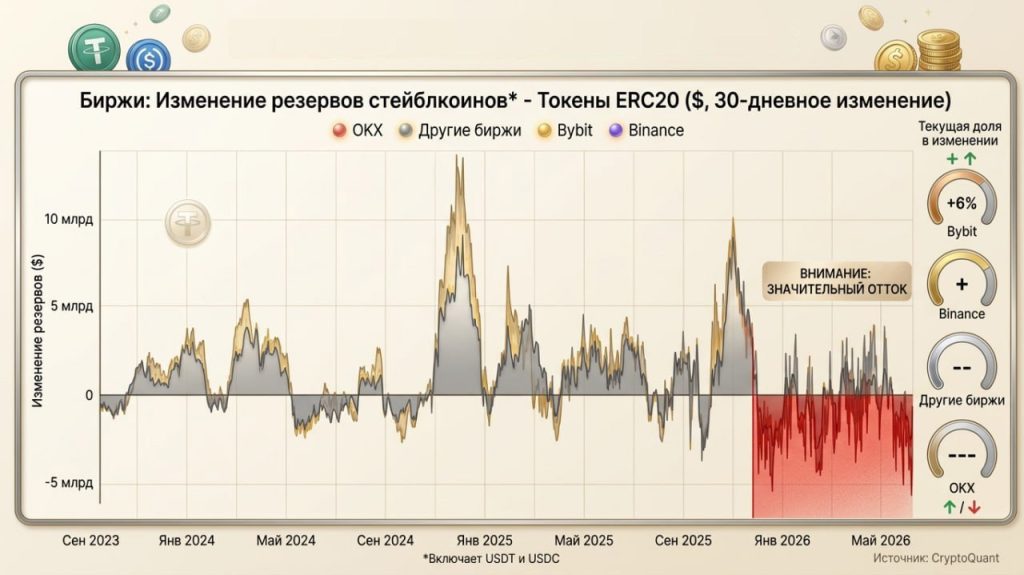
Massive Outflow of Stablecoins from Binance and Bybit: Implications for the Crypto Market
Background and Context
In recent months, the cryptocurrency market has experienced a significant trend of capital flight from major exchanges, with Binance and Bybit being at the forefront. According to reports, reserves at Binance have decreased by $1.55 billion, while Bybit has seen a reduction of $786 million in the same timeframe. This total outflow of nearly $2.3 billion raises alarm bells about liquidity and market sentiment among crypto investors.
The ongoing outflow of stablecoins from these platforms reflects a broader trend in the cryptocurrency market where investors are increasingly hesitant to hold their assets on exchanges. Many are opting to withdraw stablecoins altogether, potentially signaling a retreat from the market amidst growing concerns about volatility and regulatory pressures. Historically, events like these have led to significant price fluctuations, making it crucial for traders and investors to understand the underlying causes and potential consequences.
Key Data and Metrics
Analyzing the data, the outflow from Binance and Bybit can be attributed to various factors, including market dynamics, regulatory scrutiny, and shifting investor sentiment. Over the past month, the total liquidity in the market has diminished, contributing to a bearish outlook. The decline in reserves can be seen as a reflection of traders’ apprehension towards market stability.
As of recent reports, the liquidity shortage has created difficulties for Bitcoin (BTC) to break out of its consolidation zone. With the current market cap of Bitcoin hovering around $450 billion, the recent drop in liquidity has exacerbated the struggle for BTC to regain upward momentum. This situation highlights the importance of liquidity in facilitating price movements and maintaining market stability.
Market Analysis
The current trend of stablecoin outflows has significant implications for the crypto market. Liquidity, which is essential for healthy trading conditions, is being strained as investors withdraw their assets. This lack of liquidity could lead to increased volatility in Bitcoin and other cryptocurrencies, as even minor trades may cause larger price swings.
Furthermore, as discussed in our analysis of market sentiments, the prevailing pessimistic attitudes among investors could lead to a bearish phase for Bitcoin in the short term. With many traders preferring to hold stablecoins outside of exchanges, the market may face a prolonged period of stagnation, which could hinder potential recovery efforts.
Expert Perspectives
Market analysts are closely monitoring the situation, as the outflow of funds could indicate a broader shift in investor behavior. According to experts, this movement away from centralized exchanges may be driven by fears of regulatory actions or security breaches. The recent scrutiny of exchanges by regulatory bodies might have compelled traders to reassess their risk exposure.
Additionally, the potential for further technological developments, such as the integration of decentralized finance (DeFi) platforms, could play a role in shaping the future landscape of cryptocurrency trading. As more investors seek alternatives to traditional exchanges, platforms that offer enhanced security and user control may gain traction.
Risks and Opportunities
The current market dynamics present both risks and opportunities for investors. On one hand, the liquidity crisis could lead to increased price volatility, posing risks for those holding significant positions in cryptocurrencies. Traders should exercise caution and consider employing risk management strategies to navigate potential downturns.
On the other hand, the outflow of stablecoins could pave the way for innovative solutions in the crypto space. As liquidity issues become more pronounced, platforms focusing on liquidity provision and decentralized trading solutions may find new opportunities for growth. The rise of decentralized exchanges (DEXs) could offer a viable alternative for traders seeking to maintain their positions without relying on centralized platforms.
Future Outlook
Looking ahead, the future of the crypto market will largely depend on how exchanges adapt to the changing landscape. If the current trend of stablecoin outflows continues, exchanges must find ways to restore investor confidence and ensure liquidity. This may involve transparent communication regarding regulatory compliance and security measures.
Moreover, as more investors become aware of the risks associated with centralized exchanges, the demand for decentralized solutions is likely to increase. Platforms that can offer enhanced security, privacy, and user-friendly interfaces may see a surge in adoption.
Conclusion
In summary, the significant outflow of stablecoins from Binance and Bybit highlights a critical moment in the cryptocurrency market. As liquidity continues to dwindle, both traders and investors must remain vigilant and informed about the evolving dynamics. The implications of these trends are far-reaching, affecting not only Bitcoin but the entire market as it grapples with uncertainty and potential volatility.
As discussed in our recent market analysis, understanding these movements is vital for making informed investment decisions. Traders are encouraged to stay updated on market conditions and consider diversifying their portfolios to mitigate risks. For further insights and trading opportunities, visit MEXC to explore the latest offerings.