
The $1 Million Warning: How Phishing Scams Exploit Smart Contract Approvals on Ethereum | MEXC Analysis
09.07.2026 13:02
The Potential Reversal: Analyzing Bitcoin ETF Flows and the Next Market Cycle | MEXC Analysis
09.07.2026 14:02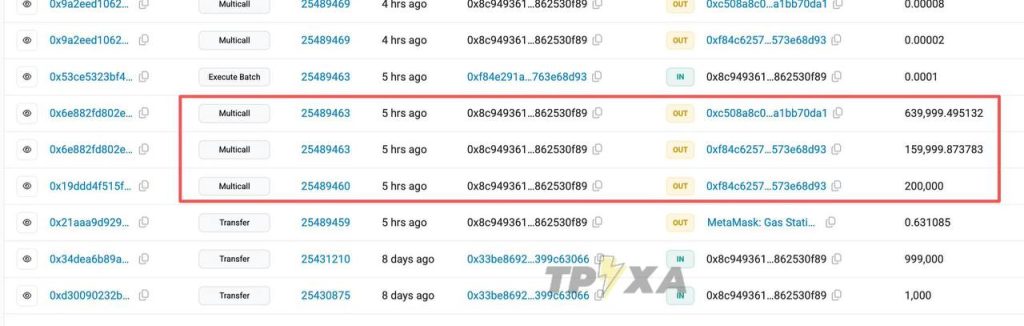
🚨 The $1 Million Warning: How Phishing Scams Exploit Smart Contract Approvals on Ethereum
The cryptocurrency market is facing a sophisticated and rapidly evolving threat landscape, with phishing scams becoming increasingly professionalized and devastating. A recent incident involving the loss of nearly $1 million in USDT serves as a brutal, real-time warning to every digital asset holder: the danger lies not in sending your crypto directly, but in signing what appears to be a benign “smart contract approval.” This case exposes one of the most critical and misunderstood vulnerabilities in Web3 security—the concept of spending allowances. For serious crypto investors, understanding this mechanism is paramount for protecting capital and navigating the complex world of decentralized finance (DeFi).
🔬 The Anatomy of the Scam: Why Approvals are Dangerous
Most users understand that signing a transaction sends crypto out of their wallet. However, the scam exploits a more subtle function: approving spending limits. When you interact with any DeFi protocol or NFT marketplace, you often have to “approve” the contract address (the smart contract) to spend a certain amount of your tokens on your behalf. This approval is essentially granting permission—a digital key—to that specific piece of code.
Malicious actors exploit this by creating fake-looking contracts that trick users into approving unlimited spending permissions (`unlimited allowance`). Once approved, even if the user never interacts with the scammer’s site again, the attacker can call the contract and drain all available funds from the wallet—a process known as an unauthorized withdrawal. The key takeaway is: Approving a contract does not mean sending money; it means giving permission to spend it.
Understanding this vulnerability is why we must treat every smart contract interaction with extreme caution. For a detailed breakdown of these risks and preventative measures, please read our comprehensive guide on The $1 Million Warning: How Phishing Scams Exploit Smart Contract Approvals on Ethereum.
🛡️ The Critical Security Gap: Understanding Smart Contract Permissions
This vulnerability highlights a crucial gap in user education. In traditional banking, you must physically give cash to someone to let them spend it. In DeFi, the “approval” mechanism acts as a digital key that grants spending power without moving funds immediately. This distinction is vital for self-protection.
To mitigate this risk, security experts strongly recommend two practices:
- Always check the contract address: Use reputable block explorers (like Etherscan) and verify the code to ensure you are interacting with the legitimate protocol address.
- Limit allowances: Never approve unlimited spending. If a service only needs 50 USDT, do not approve 100% of your entire wallet balance.
🌐 Macro Context: The Global Capital Flow Driver
These scams are not isolated incidents; they are symptoms of the massive, global capital flow into decentralized assets. Criminals exploit this liquidity and complexity. Analyzing The Global Capital Flow Dilemma: Why TradFi Dominance Matters for Crypto helps frame the narrative—the tension between centralized financial controls and the need for permissionless, borderless capital movement that crypto provides.
🚀 The Future of Finance: Utility as a Defense
The increasing global regulatory pressure on platforms like Telegram is acting as a powerful catalyst, forcing both traditional finance (TradFi) and communication platforms to acknowledge the superior resilience offered by decentralized rails. This necessity for truly permissionless systems drives the adoption of foundational layers like Ethereum (ETH). For those looking at how massive capital flows are adapting to this new reality, reviewing The Next Frontier of Finance: Why Ethereum’s Institutional Adoption Signals a Paradigm Shift is key, as ETH provides the robust, decentralized infrastructure needed to build systems that are resistant to state capture or criminal exploitation.
📈 Market Snapshot & Strategic Takeaways
The global crackdown on crypto crime by law enforcement agencies like INTERPOL serves as a positive signal for market maturity. It shows that the industry is professionalizing and that security education must become a core part of participation. As of now, Bitcoin (BTC/USDT) is trading at 62900.0 USDT, showing a modest gain of +1.2% in the last 24 hours. This stability amidst market cleanups underscores BTC’s enduring role as a reliable digital store of value.
Ethereum (ETH/USDT) is holding steady at 1752.63 USDT, confirming its stability as a foundational layer amidst global chaos.
✅ Strategic Action for Traders
The key takeaway is that security and education are your most valuable assets. Never let the promise of quick riches overshadow the need for due diligence (DYOR). To manage your portfolio effectively in this complex environment, mitigate risk, and access top-tier tools for high-leverage trading while minimizing exposure to scams, utilize MEXC:
🚀 Trade with Confidence on MEXC: MEXC Referral Link
*Source Material:* Synthesis of reports regarding major phishing incidents and smart contract vulnerabilities; supplemented by authoritative security guides from blockchain forensics firms.
Tags: Security, Phishing, Smart Contract, Ethereum, Scam Alert, Web3 Safety