
The EU’s “Gatekeeper” Ruling on Apple App Store: What It Means for Web3 and Digital Competition
09.07.2026 23:12
The Cycle of Confidence: Why Bitcoin’s Bear Market is Different and More Institutional | MEXC Analysis
10.07.2026 08:32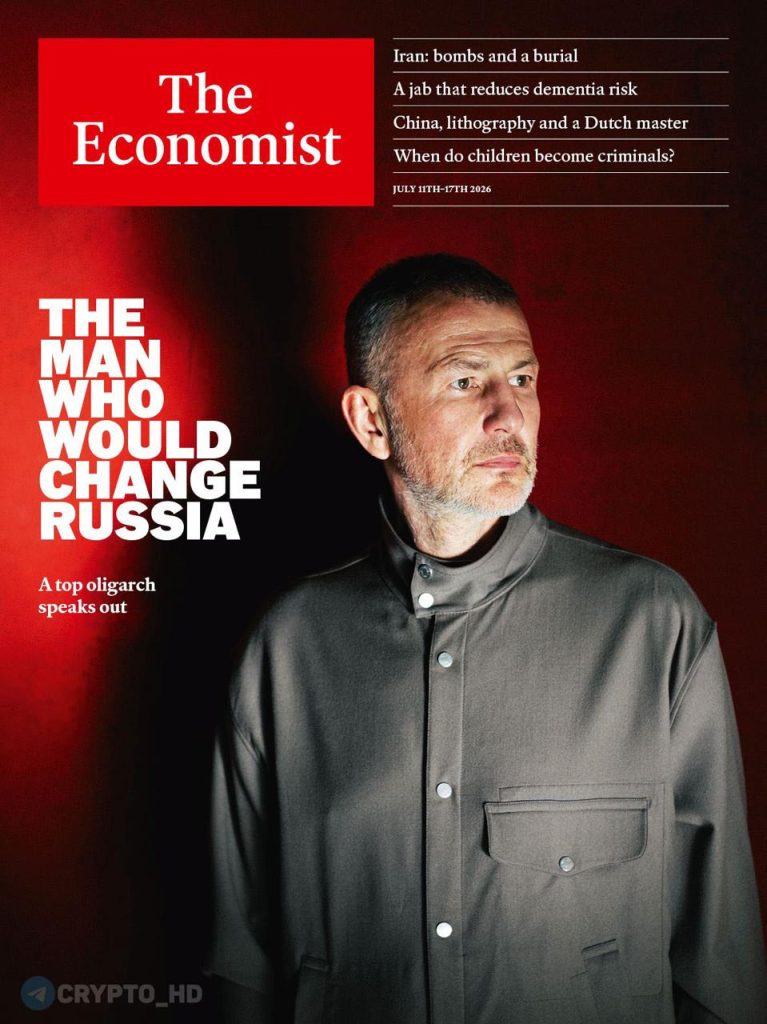
The Global Convergence: How The Economist’s Latest Coverage Signals the Maturity of Web3
The crypto market is no longer a niche, speculative corner of finance; it is rapidly becoming a core component of global economic infrastructure. With major publications like The Economist dedicating significant coverage to digital assets—as seen in their recent July issues—the narrative has shifted from “if” Web3 will succeed to “how” it will be regulated and integrated into the existing financial system. This shift signals that the industry is maturing, moving past early hype cycles toward a phase of structural utility and institutional acceptance.
The Main Themes: Convergence of AI, Regulation, and Utility
Recent analyses from top-tier global publications consistently point to three major themes defining Web3’s future:
- Artificial Intelligence (AI) Integration: AI is not just an application; it is the engine that will power the next wave of decentralized protocols. From advanced code auditing by the Ethereum Foundation AI in Action: How Ethereum Foundation is Using Advanced Agents to Secure Web3 Infrastructure, to its role in complex financial modeling, AI is making decentralized systems more powerful and reliable.
- Global Regulatory Convergence: As digital assets cross borders instantly, international bodies like the UN are forced to create standardized legal frameworks. This push for global governance Global Governance in Cyberspace: How UN Protocols Are Shaping the Future of Web3 is a necessary step toward institutional trust, moving crypto from a “Wild West” status to a regulated utility.
- Real-World Asset (RWA) Tokenization: The most tangible use case for global finance is tokenizing real-world assets—bonds, commodities, and real estate. This process allows traditional financial institutions (TradFi) to leverage the efficiency of blockchain while maintaining necessary compliance measures like KYC/AML.
The Challenge of Centralization vs. Decentralization
This convergence creates a fascinating tension: how do you allow global finance to achieve the regulatory certainty required by banks, while preserving the core ethos of decentralization? The answer lies in hybrid models.
We see this struggle play out in major tech platforms. Apple’s recent legal battles regarding its App Store ecosystem are forcing a reckoning across all centralized gatekeepers. The EU’s “Gatekeeper” ruling is essentially demanding that large monopolies open up their digital rails for competition, a principle Web3 inherently champions The EU’s “Gatekeeper” Ruling on Apple App Store: What It Means for Web3 and Digital Competition.
This need to break down centralized control is why the security of foundational assets remains critical. The constant threat of sophisticated attacks, such as those highlighted by The Tangem Vulnerability: Understanding Laser Attacks and Hardware Security in Crypto, reinforces the necessity for decentralized, self-custodial security models.
Bitcoin’s Enduring Role as Digital Gold
Amidst this technological flux, Bitcoin’s value proposition remains remarkably stable. Its fixed supply, global acceptance, and lack of jurisdictional control cement its role as “Digital Gold.” While institutional money may move into private rails for specific tasks (like tokenized deposits), BTC’s function as a non-sovereign settlement layer is irreplaceable.
The conviction shown by major capital pools—evidenced by mega-bets on indices like the Nasdaq 100 The Signal of the Whales: How Mega-Bets on Nasdaq 100 Impact Bitcoin and Crypto Markets—confirms that global money views foundational technology as its primary growth driver, a trend that solidifies BTC’s position.
Market Snapshot & Strategic Takeaways
The consensus from major financial media is clear: Web3 is transitioning into an institutional-grade asset class. The winners will be the protocols and assets that can successfully bridge the gap between decentralized innovation and regulated compliance. This shift reduces overall risk, making it a more attractive investment for long-term capital.
As of this report, **Bitcoin (BTC/USDT) is trading at 63264.57 USDT**, showing strong resilience amidst global macro uncertainty. Meanwhile, **Ethereum (ETH/USDT) holds steady at 1746.95 USDT**, confirming its role as the leading smart contract platform that powers complex financial mechanisms and L2 ecosystems.
🚀 Trade with Confidence on MEXC
To manage your portfolio effectively by focusing on foundational assets and minimizing exposure to short-term speculation, utilize MEXC:
***
*Source Material:* Synthesis of The Economist’s recent coverage; supplemented by analysis of global regulatory trends (UN protocols), technological adoption cycles, and institutional capital flow theory.
**Tags:** Web3 Maturity, Global Finance, AI, Bitcoin, Regulation, Infrastructure
**Category:** Market Analysis