

Staking Surge: The Rise of MRKT and Its Impact on the Crypto Landscape
21.07.2026 15:10
Record Highs in ETH Staking: Implications for the Market
21.07.2026 16:11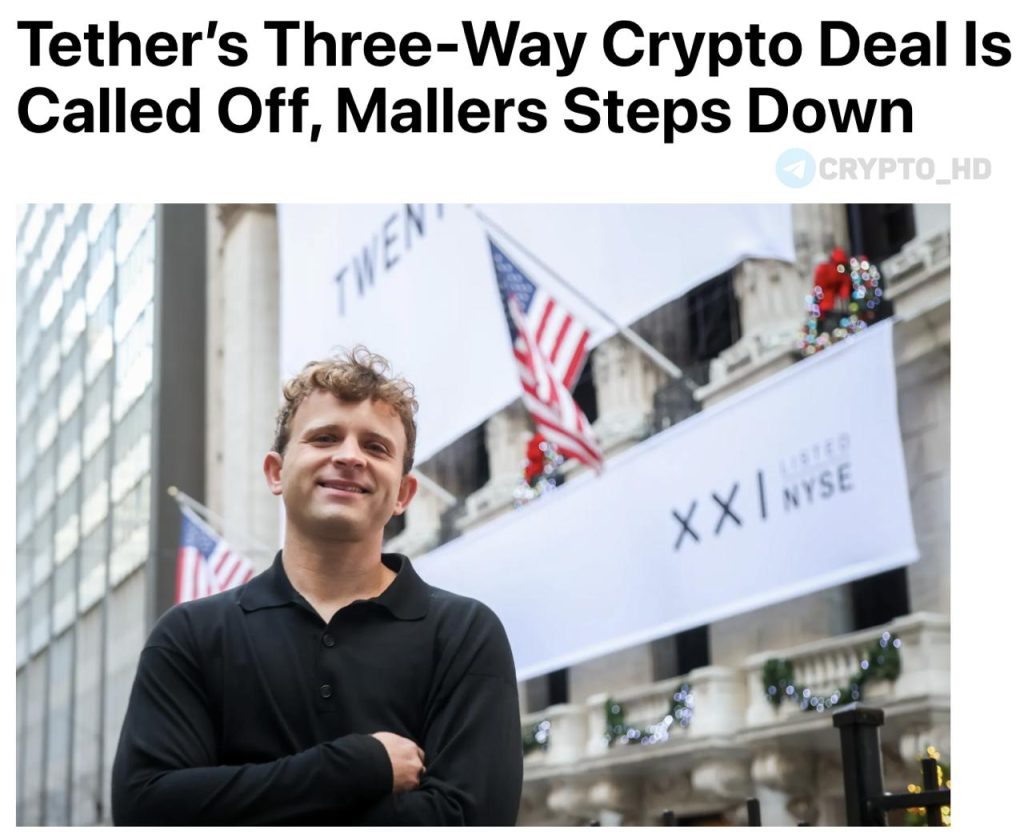
Disruption in the Crypto Space: Tether’s Failed Merger and Its Implications
Background and Context
Tether’s recent decision to cancel a proposed merger between three crypto entities—21 Capital, Strike, and Elektron Energy—marks a significant shift in the company’s strategic direction. Tether, known for its ubiquitous stablecoin USDT, has been at the forefront of discussions about the future of stablecoins and their role in the broader cryptocurrency market. The cancellation of this merger, which aimed to consolidate resources and expertise within the crypto industry, raises questions about the ongoing consolidation trends and the future viability of partnerships in this volatile sector.
Initially, the merger was expected to create synergies that would bolster Tether’s market presence amidst increasing competition from other stablecoins like Circle’s USDC and Binance’s BUSD. However, with the departure of Jack Mallers as CEO of 21 Capital, the vision for integration has faltered. Mallers, who has been a prominent figure in the crypto space, is now focusing solely on the growth of Strike, a payment platform built on the Bitcoin network.
Key Data and Metrics
To understand the implications of this merger cancellation, it is essential to look at some key metrics. Tether currently holds a market capitalization of approximately $68 billion, making it the largest stablecoin by market cap. This gives Tether a significant amount of influence in the crypto ecosystem, especially as it serves as a trading pair for various cryptocurrencies on numerous exchanges.
In comparison, its main competitor, USDC, has a market cap of around $30 billion. The cancellation of the merger could potentially hinder Tether’s ability to innovate and respond to market challenges, particularly as regulatory scrutiny intensifies across the globe. Furthermore, Tether’s reserves have come under scrutiny, leading to questions about its liquidity and backing, which could be further complicated by the lack of collaborative growth opportunities that the merger could have provided.
Market Analysis
The crypto market is currently experiencing a phase of consolidation, where smaller firms are merging to strengthen their positions against larger competitors. With the cancellation of this merger, Tether may find itself at a disadvantage as it navigates through a landscape dominated by regulatory pressures and competitive stablecoin offerings. This could lead to traders and investors re-evaluating their positions in Tether and considering alternatives like USDC or DAI, which are perceived as more compliant and transparent.
Moreover, the recent volatility in the crypto market has seen a resurgence in the use of stablecoins for transactions and trading. According to recent data, stablecoin trading volumes have soared, with USDT accounting for nearly 60% of total stablecoin transactions. This data suggests that while Tether remains dominant, its ability to maintain this position could be jeopardized without strategic partnerships and collaborations.
Expert Perspective
Financial analysts have noted that the cancellation of this merger could serve as a cautionary tale for other cryptocurrency companies looking to consolidate. Rafael Zaguri, who has taken over as CEO of 21 Capital, stated that the company will now focus on building a stable cash flow and more efficient capital distribution. This pivot underscores a broader trend where companies are prioritizing sustainability and profitability over rapid expansion and mergers.
Experts argue that the crypto industry must adapt to a more competitive landscape where the emphasis is placed on innovation and regulatory compliance. As the market matures, successful companies will likely be those that can navigate these challenges while forming strategic alliances rather than relying solely on mergers.
Risks and Opportunities
The risks associated with Tether’s decision to cancel the merger are multifaceted. As regulatory scrutiny increases, Tether may face significant challenges in maintaining its market dominance. The lack of a collaborative framework could limit its ability to innovate and adapt to changing market conditions. Furthermore, investor confidence could wane if Tether fails to address concerns regarding its reserves and backing.
On the flip side, this situation presents opportunities for other stablecoins to capture market share. If traders and investors begin to perceive Tether as less stable or transparent, they may gravitate towards alternatives. Companies like Circle and their USDC could benefit from this shift, especially as they have made strides in regulatory compliance and transparency.
Future Outlook
The future of Tether and its position within the crypto landscape remains uncertain. As the company navigates through this transitional phase, it will need to address both internal challenges and external pressures from competitors and regulators. The emphasis on achieving a stable cash flow may lead Tether to rethink its strategies, potentially exploring new partnerships or technological innovations that can bolster its market position.
Additionally, the broader implications of this cancellation could influence how other crypto companies approach strategic collaborations in the future. A focus on sustainable growth and compliance may become the norm, as firms recognize the importance of resilience in an unpredictable market.
Conclusion
Tether’s cancellation of the merger between 21 Capital, Strike, and Elektron Energy signals a pivotal moment in the crypto space. While the immediate implications may seem detrimental, the longer-term effects could reshape the landscape of stablecoins and their role in the crypto economy. As Tether reassesses its strategies and approaches to market challenges, traders and investors must stay informed about these developments to make prudent decisions regarding their crypto holdings.
For more insights on the evolving crypto landscape, be sure to explore our analysis on recent ETF inflows and their impact on Bitcoin. Additionally, check out our discussion on whale activity in Ethereum to understand how market participants are positioning themselves in this environment.