
Kazakhstan’s New Regulations for Major Crypto Miners: What Investors Need to Know
23.07.2026 14:29
Exploring the Unseen: Opportunities Beyond China’s Major Cities
23.07.2026 15:13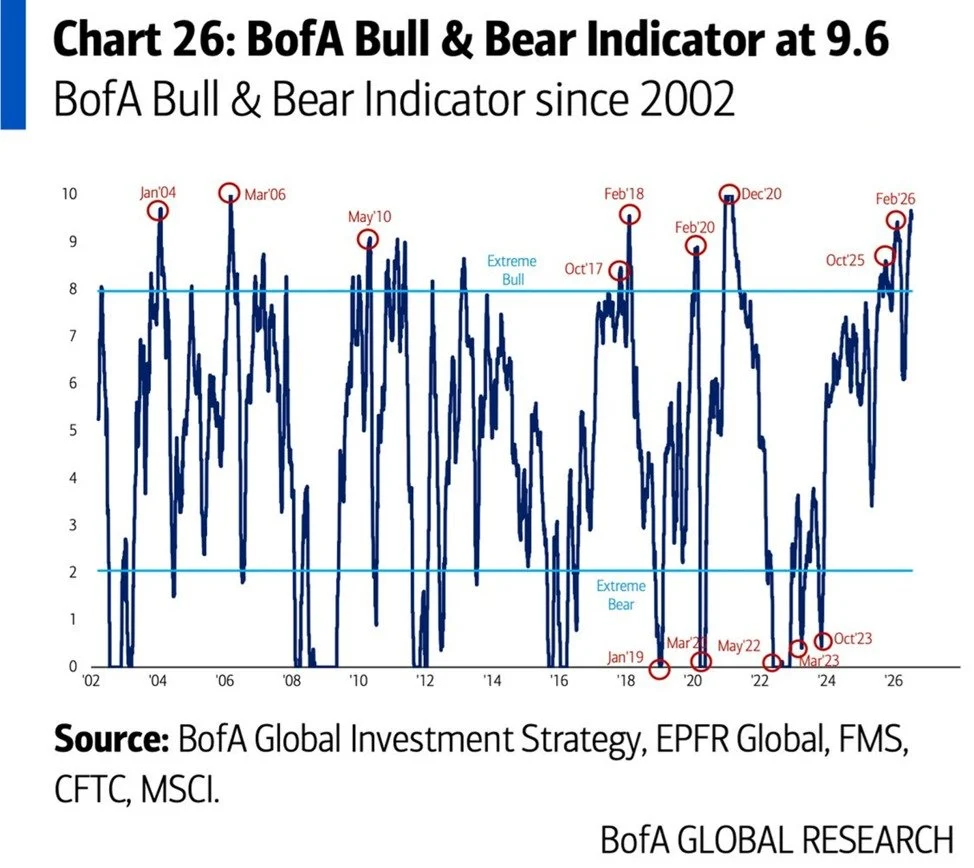
Bank of America’s Bull & Bear Indicator: A Beacon of Optimism or Just a Mirage?
Background Context: The State of Global Markets
As we navigate through the tumultuous waters of the global economy, the latest data from Bank of America’s Bull & Bear Indicator has emerged, currently sitting at a striking 9.6 points. This number, the highest since December 2020, suggests a wave of bullish sentiment flooding the marketplace. But hold on—are we witnessing genuine confidence, or is this merely a short-term blip in a much larger economic cycle?
Historically, the Bull & Bear Indicator serves as a critical barometer for gauging investor sentiment. A reading above 8 is typically interpreted as bullish, while readings below 4 signal bearish conditions. This current surge indicates that a significant 54% of investors are dismissing the notion of a global recession, with only 2% anticipating a hard landing. But what does this really mean for the investors navigating this complex landscape?
Key Data and Metrics: Numbers that Speak Volumes
The numbers are indeed telling. The surge in investment in U.S. equities has reached levels not seen since December 2024, a clear signal that investors are not just sitting on the sidelines. But let’s not get too carried away; while enthusiasm is palpable, the question remains: Are these investors making informed decisions or simply following the crowd?
Moreover, the overwhelming sentiment within sectors like semiconductors is revealing. An astounding 82% of investors are betting on continued growth in this space, a stark contrast to the cautious approach many took just months ago. This bullish outlook coincides with the broader tech sector’s recovery, as discussed in our TRON (TRX) Price Analysis, where market dynamics continue to evolve rapidly.
Market Analysis: The Tension Between Optimism and Reality
In the world of trading, the line between optimism and naivety is razor-thin. While 61% of respondents believe that major cloud companies won’t cut capital expenditures until year-end, this sentiment could be a double-edged sword. Are these firms genuinely committed to growth, or are they merely riding the wave of investor expectation?
Another statistic that raises eyebrows is the 83% of investors who do not foresee an interest rate hike by the Federal Reserve before the upcoming U.S. elections. This perspective could be viewed as either astute foresight or dangerously complacent. With inflation remaining a persistent issue, the Fed’s monetary policy decisions are anything but predictable. As noted in our article on Bitcoin and Ethereum ETFs, market reactions to policy shifts can be swift and severe, leaving investors to grapple with the fallout.
Expert Perspectives: Who’s Right and Who’s Wrong?
In a climate where 45% of investors cite the AI bubble as the primary risk, it’s essential to question the underlying assumptions driving market sentiment. Are we truly in a bubble, or is the AI sector poised for a renaissance? Experts are divided, with some voicing caution about the sustainability of AI-driven growth, while others argue that technological advancement is a given in any robust economy.
This dichotomy reflects the broader market sentiment. The allure of quick profits can often cloud judgment, as seen in the volatile history of crypto and tech stocks. The growing sentiment against shoring up positions in major tech stocks—despite prior profit-taking—suggests a reluctance to go against the tide. This highlights a crucial psychological aspect of trading—fear of missing out (FOMO) versus the rational assessment of risk.
Risks and Opportunities: Navigating a Complex Landscape
As we move deeper into the economic landscape, the risks are palpable. The prevailing optimism may lead to overconfidence, risking a correction that investors are unprepared for. The mantra of never going against the trend should be heeded, yet one must also question whether the trend is based on sound fundamentals or mere speculation.
Conversely, opportunities abound for those willing to dig deeper. The semiconductor sector, for example, is seeing unprecedented demand, driven by technological advancements and global supply chain adjustments. This is a prime area for investors to consider, as discussed in our analysis of passive income strategies that leverage emerging technologies.
Future Outlook: What Lies Ahead?
Looking ahead, the future is a mixed bag. The overwhelming sentiment against a recession paints a rosy picture, yet historical precedents warn us to tread carefully. Markets are cyclical, and while the current data suggests a positive outlook, the undercurrents of economic stress cannot be ignored.
As we approach the elections and the potential for changing fiscal policies, investors should brace themselves for volatility. The lessons of the past highlight the importance of remaining vigilant and adaptable in a fast-paced market environment. After all, as the saying goes, the trend is your friend until it isn’t.
Conclusion: The Final Word
In conclusion, while the Bank of America’s Bull & Bear Indicator may suggest a bullish tide, the reality is nuanced. Investors must sift through the noise, weighing optimism against the risks inherent in today’s market. Are we truly on the cusp of a new economic dawn, or are we merely participants in a grand illusion?
In the end, the choice is yours. As we continue to navigate these uncertain waters, consider exploring opportunities on MEXC for potential gains in this dynamic landscape.
Author: Adam Willis