

The AI Renaissance Meets Engineering Efficiency: Deep Dive into Grok 4.5 and the Future of Agentic Computing | MEXC Analysis
09.07.2026 12:59
The $1 Million Warning: How Phishing Scams Exploit Smart Contract Approvals on Ethereum | MEXC Analysis
09.07.2026 13:45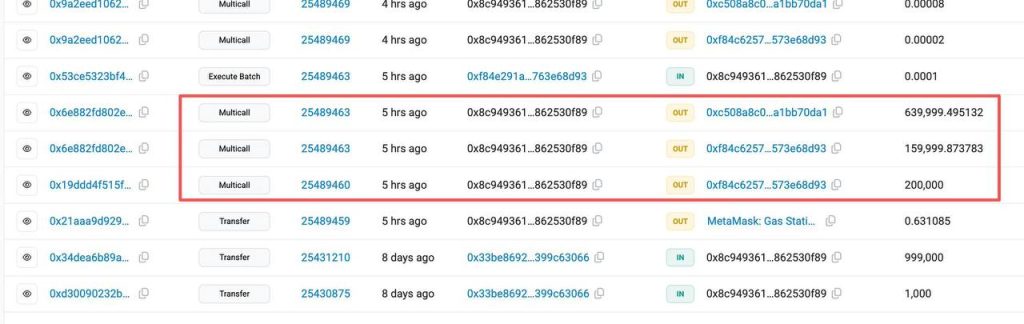
The $1 Million Warning: How Phishing Scams Exploit Smart Contract Approvals on Ethereum
A devastating incident has shaken the crypto community, serving as a stark warning to every digital asset holder. A user recently lost nearly $1 million in USDT after signing what appeared to be a benign transaction—a malicious smart contract approval on the Ethereum network. This case is not just about a single loss; it exposes a critical vulnerability in modern Web3 security: the often-misunderstood concept of “smart contract approvals.” Understanding this mechanism is paramount for protecting your digital wealth and navigating the complex, high-stakes world of decentralized finance (DeFi).
Understanding the Scam: Why Approvals are Dangerous
Most users understand that signing a transaction sends crypto out of their wallet. However, the scam exploits a more subtle function: approving spending limits. When you interact with a DeFi protocol or an NFT marketplace, you often have to “approve” the contract address (the smart contract) to spend a certain amount of your tokens on your behalf. This approval is not the transfer itself; it’s merely granting permission.
The malicious actors exploit this by creating fake-looking contracts that trick users into approving unlimited spending permissions (an “unlimited allowance”). Once approved, even if the user never interacts with the scammer’s site again, the attacker can call the contract and drain all available funds from the wallet—a process known as a “rug pull” or unauthorized withdrawal. The key takeaway is: Approving a contract does not mean sending money; it means giving permission to spend it.
The Critical Security Gap: What You Must Know
This vulnerability highlights a crucial gap in user education. In traditional banking, you must physically give cash to someone to let them spend it. In DeFi, the “approval” mechanism acts as a digital key that grants spending power without moving funds immediately.
To mitigate this risk, security experts strongly recommend two practices:
- Always check the contract address: Use reputable block explorers (like Etherscan) and verify the code to ensure you are interacting with the legitimate protocol address.
- Limit allowances: Never approve unlimited spending. If a service only needs 50 USDT, do not approve 100% of your entire wallet balance.
For more in-depth analysis on how systemic risks can impact digital assets, review our guide on The Anatomy of a Liquidation Cascade: Analyzing the $87M ETH Short and What It Means for Crypto Traders. Understanding these systemic risks is vital to protecting your capital.
Proactive Defense: 5 Steps to Secure Your Ethereum Wallet
Based on industry best practices, here are five actionable steps every crypto user must implement immediately to protect against phishing and smart contract attacks:
- Use Hardware Wallets: Never store large amounts of funds on hot wallets or exchange accounts alone. A hardware wallet provides the highest level of security by requiring physical access for signing transactions.
- Implement Smart Contract Limits: When interacting with any new protocol, check if you can set a spending limit (allowance) that is only sufficient for the intended transaction.
- Verify Links and Addresses: Treat every link and contract address as suspicious until verified by multiple, trusted sources. Look for official documentation on the project’s website.
- Keep Software Updated: Ensure your wallet software (e.g., MetaMask) is running the latest version to patch known security vulnerabilities.
- Never Trust a Single Source: If an offer or contract seems too good to be true, it almost certainly is.
The Macro Context: Why Security Matters Now More Than Ever
As DeFi and Web3 continue their rapid expansion, the total value locked (TVL) in decentralized protocols increases exponentially. This massive influx of capital makes the ecosystem a prime target for sophisticated criminal operations. The continuous battle between innovation and security underscores why decentralization is so valuable—it means no single point of failure can seize all your assets.
This push towards resilient, private finance also connects to global macro trends. Understanding The Global Capital Flow Dilemma: Why TradFi Dominance Matters for Crypto helps frame why the demand for permissionless, secure assets like ETH remains so high.
Market Snapshot & Strategic Takeaways
This scam is a brutal reminder that technical knowledge is your best defense. The market’s response to such events is often a flight toward proven security and utility. As of now, Bitcoin (BTC/USDT) is trading at 62880.62 USDT, showing a modest gain of +1.21% in the last 24 hours. This stability amidst market cleanups underscores BTC’s enduring role as a reliable digital store of value, making it a preferred hedge against systemic risk. Similarly, Ethereum (ETH/USDT) is holding steady at 1756.39 USDT, showing a solid gain of +1.1%.
The lesson from this scam is to prioritize long-term research and due diligence (DYOR). To manage your portfolio effectively and participate in high-leverage trading opportunities while minimizing risk, utilize MEXC’s advanced platform:
🚀 Trade with Confidence on MEXC: MEXC Referral Link
*Source Material:* Analysis of the phishing scam reported on Telegram; supplemented by authoritative security guides from MetaMask Support and Ethereum Foundation resources regarding smart contract allowances and phishing prevention.