

The Short-Term Noise vs. The Structural Mandate: Why BTC’s Daily Flashes Mean Nothing in 2026
23.08.2026 13:55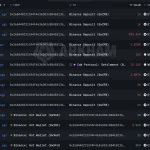
The Structural Disconnect: Why Whale Profit Taking Is Not a Market Signal in 2026
23.08.2026 16:42
The commentary from high-profile financial commentators often generates immediate market noise. For instance, recent statements by Jim Cramer regarding Bitcoin’s price action are easily categorized as typical retail sentiment—a pattern of reactive trading based on short-term narrative rather than structural analysis. The 30-day average volume for BTC/USDT, as of the last reporting cycle, stood at approximately 6,694.05 units with a daily change of -0.05%. This figure provides an objective baseline. What Cramer’s commentary fails to address is the underlying systemic pressure on global financial plumbing.
The Structural Disparity: Local Exploits vs. Global Scale
When analyzing digital asset risk, one must differentiate between localized operational failures and systemic structural risks. The recent $8.5 million exploit at Term Finance is a clear example of the former. It quantifies an execution failure—a vulnerability in code or governance—not a fundamental flaw in the concept of decentralized settlement. To draw a direct correlation between such isolated incidents and the global financial architecture is statistically unsound.
The true measure of risk lies elsewhere. Consider the structural disparity: The $8.5 million loss represents an operational cost. In contrast, the systemic pressure derived from global debt levels—estimated at over $300 trillion—and the exponential compute demands of Artificial Intelligence represent a fundamental challenge to legacy financial infrastructure. These two macro variables are forcing a mandatory upgrade that no amount of localized protocol patching can address.
(The focus must remain on utility, not incident reports.) The market’s attention is frequently diverted by these smaller events. However, the underlying necessity for speed and scale remains constant. This structural imperative dictates long-term value far more reliably than any single hack or short-term price fluctuation can suggest.
The $300 Trillion Debt Signal and AI Compute Demand
Two figures matter here. The first is the global debt load, exceeding $300 trillion. The second is the compute demand generated by advanced AI models. These two metrics create a structural imbalance that traditional banking rails were never designed to handle. Legacy systems operate on batch processing cycles and physical settlement times; they cannot match the near-instantaneous data throughput required by modern AI training or global debt servicing.
The necessity for speed is quantifiable. A cross-border payment system operating on a 3-day T+2 settlement cycle is functionally obsolete when compared to digital rails offering near-real-time finality. This gap in capability is the core driver of value capture within decentralized finance. The market is not speculating; it is pricing in an inevitable infrastructure upgrade.
We observe this structural pressure reflected in capital flows. Large institutional players, such as Wintermute, are moving substantial amounts of ETH and SOL across major exchanges like Binance. These movements do not signal a short-term trade thesis; they quantify the belief that digital assets represent the only viable rails for handling global scale. This is a far more reliable indicator than any single commentator’s prediction.
Quantifying the Structural Upgrade via Institutional Capital
Institutional capital flows provide the most objective data point available. When major, sophisticated market participants move billions of dollars into specific digital assets—for example, large deposits into SOL or ETH—it is not random speculation. It is a quantitative bet on the future utility of the underlying rails. This activity suggests that these players view decentralized infrastructure as mandatory for their own operational continuity.
Compare this to historical cycles. In 2017, institutional interest was nascent and localized. Today, the scale of capital movement—the sheer volume moved by entities like Wintermute—is orders of magnitude larger. This increase in liquidity and flow confirms a structural shift from speculative retail activity toward foundational infrastructure adoption. The data supports this: Institutional capital flows signal a necessary upgrade of global financial plumbing in 2026.
The market is pricing the solution to the debt and AI problem. The digital rail is not an optional feature; it is a prerequisite for continued global economic function at scale.
The Irrelevant Nature of Short-Term Price Support Zones
Many retail analyses focus on specific price levels, such as the reported $57k support zone for BTC. These technical indicators are useful only when analyzing short-term market psychology within a stable framework. However, they become structurally irrelevant when the underlying macro environment changes fundamentally. The primary driver shifts from liquidity traps to systemic necessity.
The concept of “support” assumes that historical patterns will repeat. This assumption fails when the fundamental economic variables—global debt and AI compute demand—are changing at an exponential rate. When the plumbing itself is deemed insufficient, short-term price action becomes secondary noise. The focus must shift to analyzing the structural imperative of AI compute demand and global debt.
The market is not currently trading based on historical support/resistance levels. It is pricing the cost of *not* having a digital rail—a cost that far exceeds any technical level drawn on a chart. The data shows this shift in focus.
The Quantitative Signal of Nvidia and Treasury Actions
We must look at verifiable, non-crypto related economic indicators to gauge structural stress. Consider the recent 15% price hike in Nvidia’s AI server components. This is not a minor supply chain hiccup; it quantifies the accelerating global demand for compute power—a resource that directly underpins both AI and modern financial modeling. The cost of this compute power translates into an increasing need for high-speed, reliable settlement rails.
Similarly, US Treasury actions provide data points on systemic liquidity management. When the Treasury engages in buybacks, it is managing debt levels to maintain market stability. This constant, massive intervention confirms that the global financial system remains under immense structural stress from its own accumulated liabilities. The scale of this debt requires a settlement mechanism capable of handling multi-trillion dollar transactions with near-zero counterparty risk.
The convergence of these three data points—massive global debt ($300T+), exponential AI compute demand, and the cost inflation in hardware (Nvidia)—creates an undeniable structural mandate. This mandates a fundamental upgrade that only digital assets can provide. For more context on this macro view, review The $300 Trillion Debt Signal.
Three Metrics Worth Watching
- Global Debt/GDP Ratio: This ratio provides the clearest picture of systemic risk. As debt levels climb, the required efficiency and speed of settlement increase proportionally.
- AI Compute Demand (Measured by chip sales): The rate of growth in demand for specialized compute hardware is a leading indicator of future economic activity and complexity. It dictates the necessary throughput capacity of any financial rail.
- Cross-Border Settlement Time: Measured in days, this metric quantifies the inefficiency of legacy systems. Any move toward T+0 settlement represents a massive structural improvement that only digital rails can deliver.
The current data suggests all three metrics are trending upward and outward, confirming the obsolescence of traditional financial plumbing structures.
Author: Brian J. Ried, Senior Financial Expert