

South Korea Clamps Down on Crypto Exchange Apps: What’s at Stake?
24.07.2026 17:53
Cardano’s AI Challenge: Are Cryptos Ready?
24.07.2026 19:05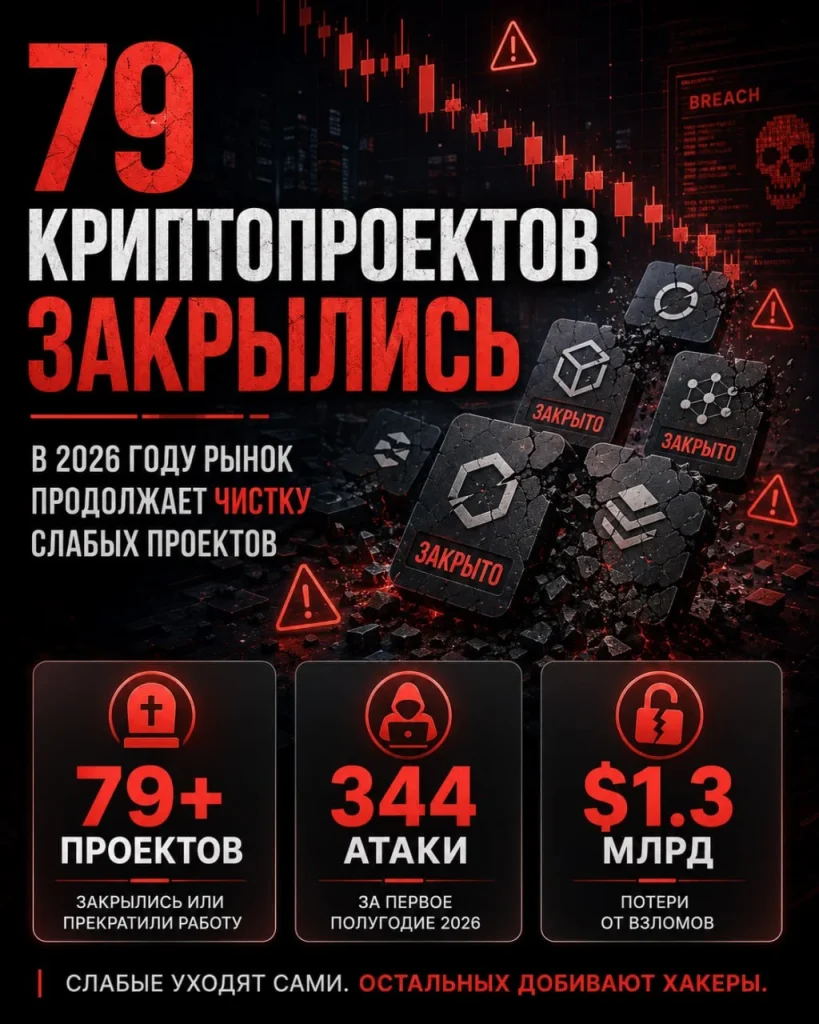
Crypto Landscape: Bear Market Culls Weak Projects in 2026
Rising Tide of Project Closures
The year 2026 has witnessed a seismic shift in the cryptocurrency sector, with at least 79 projects closing their doors. This wave of shutdowns isn’t restricted to exchanges alone but spans wallets, DeFi protocols, NFT platforms, and more. According to industry insiders, this phenomenon is a cyclical cleansing during a bear market. For traders, understanding these patterns is crucial as it signals which types of projects might weather future downturns.
A meaningful comparison to traditional finance sees echoes of bear markets in equities, where weaker companies often falter when economic pressures mount. This parallel offers crypto investors insights into risk management strategies akin to those applied in stock markets. Frankly, these closures represent both a caution and an opportunity — a chance for robust projects to capture market share unchallenged by poorly capitalized counterparts.
Vulnerability to Cyber Attacks
In addition to structural weaknesses, the crypto sector remains highly susceptible to cyber threats. The first half of 2026 saw an estimated $1.3 billion vanishing through 344 hacking incidents, a stark reminder of the vulnerabilities that persist. Per Elisabeth Stark, Chief Security Officer at CryptoDefend, the market’s intricate infrastructure provides numerous entry points for hackers. As security protocols lag behind, particularly in smaller or resource-strapped projects, these threats become more pronounced.
Drawing comparisons to cybersecurity challenges in traditional sectors like banking could be instructive. Despite their long history, banks also face continuous cyber threats, albeit with tighter regulations and more developed responses. For crypto investors, understanding these exposures necessitates scrutiny — assessing a project’s commitment to security just as one would evaluate financial stability in conventional finance.
Bull and Bear Cycles: A Historical View
Market cycles in the crypto space are as notorious as they are predictable. Each bear cycle, such as the one currently experienced, strips away weak projects and unsustainable business models. Historical patterns, for example, the 2018 crypto winter, demonstrated a similar attrition rate of non-viable projects, setting the stage for a robust bull run.
Significantly, this cyclical nature mirrors gold’s historical performance during economic downturns, a store of value that shines brighter as other assets falter. Investors waiting in the wings might do well to take cues from such historical performances, positioning themselves in assets that historically rise post-bear phases.
Market Liquidity and Project Viability
This year, we see a classic liquidity crunch stripping away funding from underperforming projects. Often driven by declining investor sentiment and capital reallocation, liquidity becomes the lifeblood of survival. According to Lily Chan, head of research at BlockchainForensics, liquidity constraints reflect shifting risk appetites, pushing less resilient projects towards closure.
Investors keen on crypto must remain acutely aware of these liquidity trends. In traditional markets, liquidity shifts have been precursors to broader economic changes, often predicting sustained periods of volatility. The ability to swiftly reallocate resources is critical, suggesting that flexibility and readiness for upcoming opportunities make the difference between gains and losses.
Broader Implications for the Crypto Ecosystem
The closure of numerous projects yields far-reaching implications. There’s a natural consolidation occurring as stronger players absorb smaller, struggling entities, echoing a phenomenon observed in tech sectors over decades. As integration increases, efficiencies are realized, potentially leading to innovation in blockchain technology and broader utilization.
How will this shape the landscape? With significantly fewer but stronger contenders, there is room for rapid technological advancements and potential mainstream adoption — a dual boon to developers and investors alike. The live trading successes in surviving projects could set new industry benchmarks, effectively rewriting the rules of engagement in this digital frontier.
Looking Ahead: Opportunities Amidst Chaos
Investors must consider the current “purge” an opportunity. According to Tim Johnson, an analyst at CryptoTradingHub, this remains one of the best times for discerning investors to stake claims on quality projects poised to benefit from lower competition. From an analytical standpoint, identifying those with considerable partnerships, proven resilience, and a history of security excellence becomes pivotal.
With many projects facing closure, now is also the time for innovation in product offerings such as tokenized assets. Such innovations could appeal to a diverse investor base, hungry for alternative financial instruments that capitalize on market trends and offer resilience against future market turbulences.
Final Thoughts: Survival of the Fittest
What the current bear market exposes is not merely vulnerability but also potential. This period, marked by the extinction of weaker links, shapes a new playing field where only the fittest survive and thrive. Investors and traders should look towards enduring projects forming solid infrastructures, much like larger ecosystems outside of crypto that have survived similar purges.
What’s next will define the market landscape into the coming years. The lessons thus learned could be invaluable, setting the stage for more sustainable and innovative growth. The future will require agility, focus, and a keen sense of market dynamics, qualities that ultimately favor those well-informed and aptly prepared. As reflected by the shifts detailed in Bitcoin ETF inflows, navigating such an upheaval is not without opportunities.
Explore your investment avenues as market dynamics shift by signing up at MEXC.
Author: Gloria Cassell