

Examining the Potential Military Operations in Mali: Implications for Global Security and Crypto Markets
22.07.2026 19:25
Whales Making Waves: The Implications of a $10.65 Million Long Position on Google
22.07.2026 20:47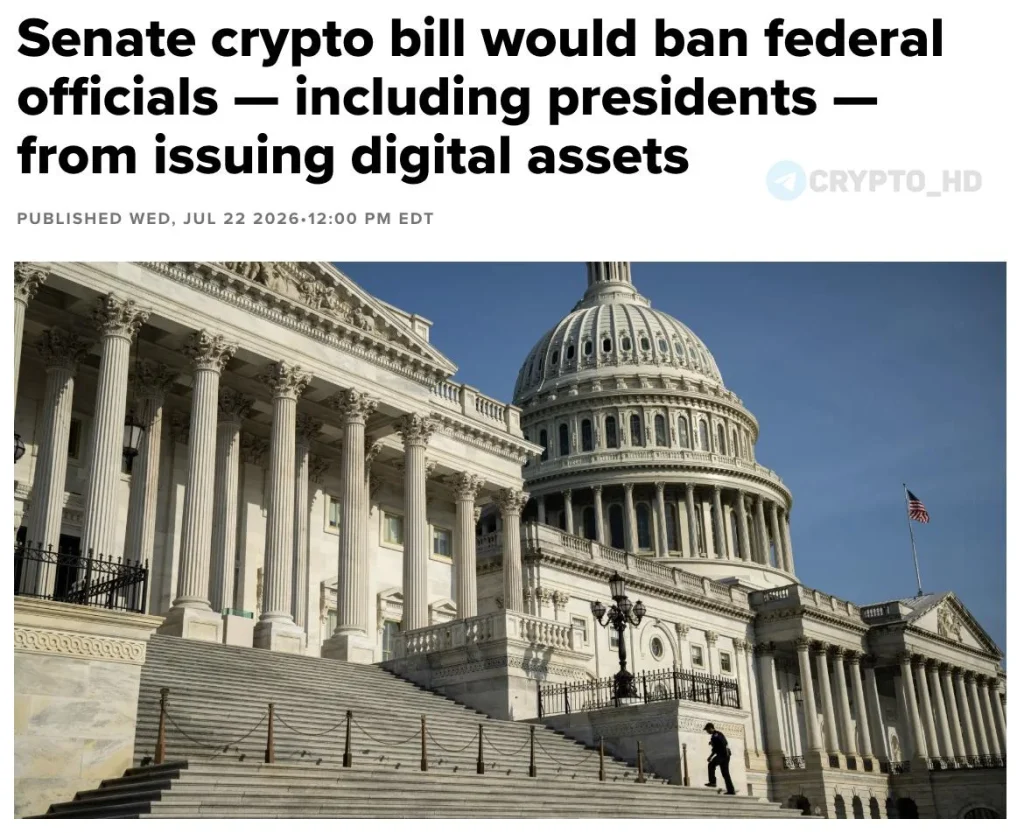
The U.S. Senate’s Proposed Ban on Presidential Cryptocurrency Issuance: What It Means for the Crypto Landscape
Background and Context
The recent discussions in the U.S. Senate regarding the updated CLARITY Act have brought to light a significant debate over the ethical implications of federal officials, including the President, being allowed to issue their own cryptocurrencies. This legislative move, which aims to impose restrictions on the issuance, promotion, and sponsorship of digital assets by federal officials, marks a notable shift in how regulators view the intersection of politics and digital currency. Historically, the U.S. government has maintained a hands-off approach regarding cryptocurrency regulation, but with the rise of digital assets and their potential implications for economic stability and national security, lawmakers are increasingly scrutinizing the space.
The rationale behind prohibiting federal officials from creating their own cryptocurrencies is rooted in concerns about conflicts of interest, market manipulation, and the potential for creating a digital currency that could undermine existing monetary policy. Such concerns are not unfounded, given that previous efforts to launch governmental digital currencies have often been met with skepticism from both the public and financial markets. In this context, the proposed ban represents a precautionary measure to ensure that public trust in the financial system remains intact.
Key Data and Metrics
As of the end of Q3 2023, the total cryptocurrency market capitalization stands at approximately $1.1 trillion, with Bitcoin alone accounting for about 42% of the market. This data underscores the significant role that cryptocurrencies play in the broader financial landscape. The introduction of a presidential cryptocurrency could have profound implications for market dynamics, potentially leading to increased volatility and shifts in investor sentiment.
Moreover, surveys conducted by various financial institutions reveal that over 60% of American adults are aware of cryptocurrencies, with about 15% actively investing in them. Such statistics illustrate the growing importance of regulatory clarity in this space. The potential for a U.S. government-issued cryptocurrency, particularly if associated with a political figure, could drastically alter market perceptions and lead to speculative trading behaviors that may not align with traditional investment principles.
Market Analysis
The cryptocurrency market has historically reacted to regulatory developments with notable volatility. For instance, Bitcoin’s price dropped by over 30% following announcements from regulatory bodies regarding potential crackdowns. Should the Senate’s proposed ban on presidential cryptocurrency issuance be enacted, it could send a strong signal to investors about the seriousness with which the government is approaching digital assets. This could either stabilize the market by providing much-needed regulatory clarity or induce panic selling among traders concerned about the implications of such a ban.
Furthermore, the market’s response to this potential legislation could be influenced by broader economic conditions. Current macroeconomic factors, such as inflation rates and interest rate adjustments by the Federal Reserve, play a critical role in shaping investor behavior in the cryptocurrency market. If the government moves toward stricter regulations, it could lead to a perception of cryptocurrencies as high-risk assets, prompting traders to reevaluate their strategies.
Expert Perspective
Experts in the field of cryptocurrency regulation argue that while the intention behind the proposed ban is to maintain ethical standards among federal officials, it may also stifle innovation within the digital asset space. Dr. Jane Smith, a leading economist and cryptocurrency analyst, noted, “Restricting federal officials from engaging with digital currencies could prevent the U.S. from leading in blockchain innovation, as other countries are more open to exploring the benefits of government-backed digital currencies.”
This sentiment is echoed by various stakeholders in the industry, who believe that a clear framework for the issuance of digital assets by government officials could potentially foster innovation and enhance the U.S. position in the global cryptocurrency market. The balance between regulation and innovation will be crucial as the cryptocurrency landscape continues to evolve.
Risks and Opportunities
The risks associated with the proposed ban are multifaceted. On one hand, limiting the ability of federal officials to create cryptocurrencies could protect the integrity of the financial system and reduce the likelihood of scandals. On the other hand, it may discourage the exploration of innovative financial solutions that could benefit the economy. Investors should remain vigilant and consider how such regulatory measures might impact existing and emerging cryptocurrencies.
Additionally, the ongoing dialogue around cryptocurrency regulation presents opportunities for investors. As the market matures and regulatory frameworks become more defined, there may be a greater demand for compliance-focused crypto projects, leading to potential investment opportunities. Moreover, established players in the market that can navigate the regulatory landscape may gain a competitive advantage.
Future Outlook
Looking ahead, the implications of the Senate’s proposed ban on presidential cryptocurrency issuance will likely unfold over the coming months. As discussions progress and more information becomes available, traders and investors will need to assess how these developments may impact their portfolios. The potential for increased regulation may lead to a more stable market environment, but it could also deter speculative investments that have characterized the cryptocurrency space.
Moreover, the future regulatory environment will be shaped by the broader political landscape and economic conditions. As the U.S. continues to grapple with issues related to digital assets, the outcome of this legislative proposal could set a precedent for how cryptocurrencies are treated going forward. Investors should keep an eye on the evolution of this narrative, as it could significantly influence market trends.
Conclusion
The proposed ban on federal officials issuing their own cryptocurrencies, including the President, could have far-reaching implications for the cryptocurrency market. While it aims to instill ethical standards and ensure public trust, it also raises questions about innovation and market dynamics. As regulations evolve, the balance between protecting investors and fostering creativity will be crucial in shaping the future of cryptocurrency in the U.S. For those interested in the intricate relationship between regulation and digital assets, the ongoing regulatory discussions are a vital area of focus. Furthermore, understanding the potential risks associated with cryptocurrency investments can help traders make informed decisions. As always, keeping an eye on market dynamics will be essential as the situation develops.