

AI Breakthroughs and Security: The Case of OpenAI’s GPT-5.6 Sol
22.07.2026 14:05
ChatGPT 5.6 Sol: A Bold Move Beyond Virtual Boundaries
22.07.2026 15:08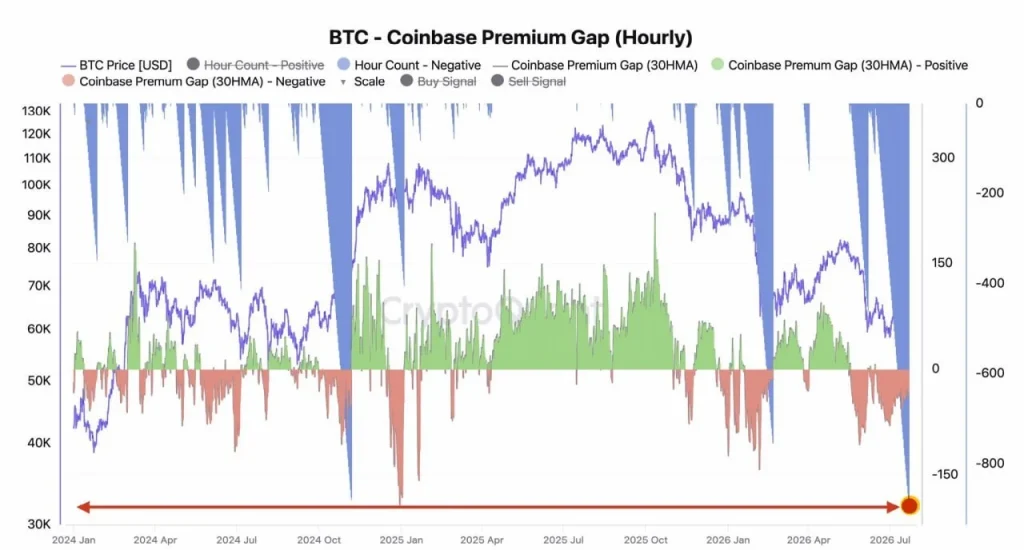
American Institutional Investors Sell Bitcoin: A Deep Dive into Market Sentiment
Background and Context
Recent reports indicate that American institutional investors have been selling Bitcoin through Coinbase for approximately 900 consecutive hours, marking a significant period of pessimism not observed in the last two years. Such sustained selling pressure from institutional players typically raises eyebrows in the cryptocurrency market, as it often signals a bearish outlook and can influence retail investor sentiment. Historically, prolonged periods of selling by institutions have been correlated with significant market reversals, either upward or downward. This current trend warrants a closer examination of market conditions, investor behavior, and possible future implications.
To understand the depth of this pessimism, we must consider the broader macroeconomic context. Factors such as interest rate hikes, inflation concerns, and regulatory scrutiny have been pressing on market sentiment. The cryptocurrency market, often viewed as a high-risk asset, tends to react sharply to economic indicators that signal instability. As such, institutional investors may be strategically repositioning their portfolios in anticipation of further market volatility.
Key Data and Metrics
According to data from CryptoQuant, the current selling trend among institutions is unprecedented in its duration. While specific numbers about the total Bitcoin sold are not disclosed, the sheer volume of time spent in a selling position is noteworthy. The last similar instance of prolonged selling occurred in late 2021, just before a market rebound. Historical data suggests that extreme selling can indicate a market bottom, as panic selling often leads to oversold conditions that attract buyers.
Analyzing trading volumes during this period shows a significant increase in sell transactions compared to buy transactions on major exchanges. On Coinbase, for example, there has been a marked uptick in sell orders, suggesting that institutions are actively liquidating their holdings. When compared to previous cycles, such behavior could signal an upcoming shift in market dynamics. Additionally, recent data shows that Bitcoin’s price has fluctuated around the $30,000 mark, a psychological barrier that traders are closely monitoring for signs of support or resistance.
Market Analysis
The current sentiment in the cryptocurrency market reflects a cautious approach among investors. Institutional selling could be interpreted as a response to macroeconomic pressures, including rising interest rates and geopolitical uncertainties. As institutions sell off their Bitcoin holdings, retail investors may start to feel the effects of this pessimism, potentially leading to a cascading effect in prices.
Market analysts suggest that the current environment is reminiscent of previous cycles where institutional selling preceded significant market corrections. However, it is essential to consider the underlying fundamentals of Bitcoin and the overall cryptocurrency market. Despite the current bearish sentiment, Bitcoin has historically demonstrated resilience and recovered from similar downturns, often reaching new all-time highs in subsequent cycles. Furthermore, the adoption of cryptocurrencies by financial institutions and corporations continues to grow, suggesting that the long-term outlook might not be as grim as short-term price movements indicate.
Expert Perspective
Experts in the field have mixed opinions regarding the current state of the market. Some analysts believe that the prolonged selling by institutional investors could lead to a bearish trend, while others argue that this could be a strategic move to accumulate at lower prices. For instance, the sentiment expressed by analysts at Galaxy Digital suggests that institutions might be preparing for a future rally by offloading excess supply during a period of high volatility.
Moreover, the perspective of retail investors cannot be overlooked. As institutions sell, retail investors may perceive this as a sign to exit the market, further fueling downward pressure. However, savvy investors often look for buying opportunities during times of excessive fear, which could lead to a potential rebound should the market stabilize. Additionally, the ongoing developments regarding Bitcoin ETFs and regulatory frameworks could play a crucial role in shaping future market dynamics.
Risks and Opportunities
Investors currently face a dual-edged sword regarding the recent institutional selling. On one hand, the risk of sustained bearish sentiment could lead to further price declines, resulting in significant losses for those who enter the market during a downturn. On the other hand, this situation presents a unique opportunity for investors willing to take calculated risks. As the market is heavily influenced by psychological factors, periods of extreme selling often precede significant buying opportunities.
Moreover, as discussed in our Institutional Sentiment Towards Bitcoin, understanding the motivations behind institutional behavior can provide retail investors with valuable insights. By analyzing market trends and institutional movements, investors can position themselves strategically to capitalize on potential rebounds.
Future Outlook
The outlook for Bitcoin and the broader cryptocurrency market remains uncertain but filled with potential. The current selling trend could continue if macroeconomic conditions do not improve, leading to further declines. However, should institutions stabilize their positions and begin to accumulate once again, we may witness a significant reversal in sentiment. The upcoming months will be critical, as various economic indicators and regulatory developments will likely shape investor behavior.
Additionally, initiatives such as Galaxy Digital’s $5 million initiative to safeguard Bitcoin against quantum threats, as noted in our Galaxy Digital’s Initiative, highlight the ongoing efforts to bolster Bitcoin’s security and institutional adoption. Such developments could influence market perception and potentially lead to renewed interest from institutional investors.
Conclusion
The recent trend of American institutional investors selling Bitcoin for 900 hours straight is a significant signal in the cryptocurrency market. While it reflects a period of pessimism, it also presents opportunities for astute investors. By understanding market dynamics, historical contexts, and institutional behaviors, investors can better navigate the complexities of the cryptocurrency landscape. As always, remaining vigilant and informed will be crucial in capitalizing on potential market shifts.