

Multicoin Capital’s Strategic Move: Unpacking the $120 Million HYPE Token Sale
21.07.2026 22:01
Profit-Taking Strategies in Cryptocurrency: A Case Study on Ethereum
21.07.2026 23:25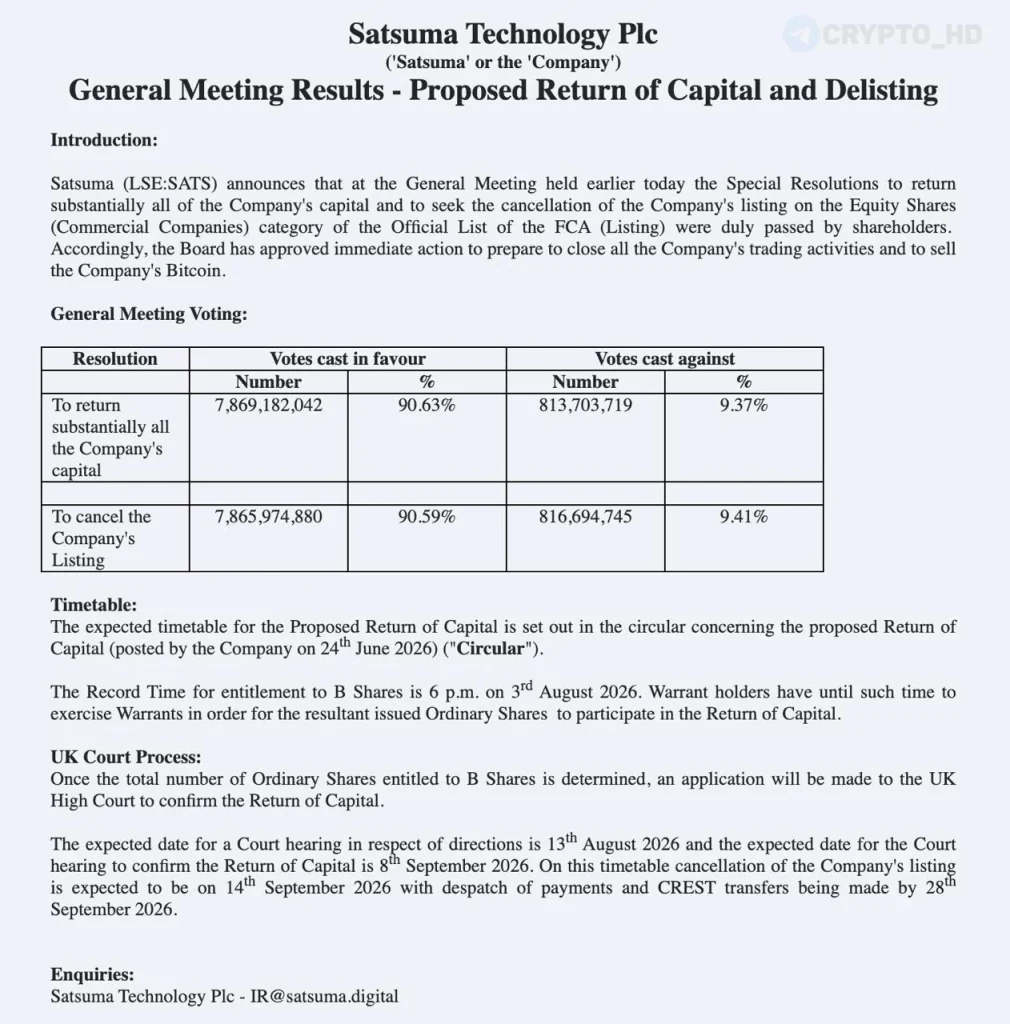
Satsuma Technology’s Bitcoin Strategy: A Cautionary Tale for Investors
Background and Context
Satsuma Technology, a company that sought to replicate the successful Bitcoin investment strategy of MicroStrategy’s Michael Saylor, recently faced a significant setback. Shareholders approved the sale of all 668 BTC, valued at approximately $44.4 million, and voted overwhelmingly for a capital return and delisting from public trading. More than 90% of the participants in the general meeting supported this decision, underscoring the urgency among investors to recover their capital.
This situation mirrors a broader trend in the cryptocurrency market where companies that heavily invest in Bitcoin have faced volatile market conditions. Satsuma’s audacious move to position Bitcoin as its primary asset was initially seen as a bold step toward leveraging the cryptocurrency boom. However, the drastic fall in its stock price—over 99%—prompted Pantera Capital, a notable institutional investor holding about 7% of Satsuma, to advocate for immediate liquidation of Bitcoin holdings.
The downfall of Satsuma Technology serves as a stark reminder of the risks associated with integrating cryptocurrency into corporate balance sheets without a robust risk management strategy. This case provides essential lessons for other companies considering similar strategies.
Key Data and Metrics
To understand the implications of Satsuma’s decision, it’s crucial to look at the metrics surrounding their Bitcoin investment. The company initially bought Bitcoin at a time when the asset was experiencing significant upward momentum, but as the market dynamics shifted, Satsuma’s holdings became a liability rather than an asset. The rapid decline in their stock price highlights the volatility inherent in cryptocurrency investments.
According to market data, Bitcoin reached an all-time high of nearly $69,000 in November 2021 but has since experienced substantial corrections, impacting investor sentiment. Satsuma’s decline parallels the broader market trends, where many investors face uncertainty. The decision to liquidate their Bitcoin holdings and return capital indicates a strategic pivot, yet it raises questions about the timing and management of their investments.
The market capitalization of Bitcoin fluctuates significantly, and companies must navigate these changes effectively. For example, during the last quarter, Bitcoin’s price saw fluctuations between $25,000 and $40,000, illustrating the unpredictable nature of cryptocurrency markets.
Market Analysis
The fallout from Satsuma Technology’s decision will undoubtedly resonate within the cryptocurrency market, as it reflects a growing caution among institutional investors in the face of market volatility. The significant losses incurred by companies like Satsuma reinforce the notion that while cryptocurrencies can offer high returns, they also come with substantial risks. Investors are now more wary of companies that heavily invest in Bitcoin and other cryptocurrencies without a clear, risk-adjusted strategy.
This case may lead to increased scrutiny among other firms considering similar investments. Companies may need to adopt more conservative strategies or diversify their portfolios to mitigate risks associated with cryptocurrency volatility. As discussed in our analysis of interest rate hikes, macroeconomic factors also play a crucial role in shaping the environment for cryptocurrency investments.
Moreover, the market’s response to Satsuma’s liquidation could influence Bitcoin’s price trajectory. If more companies begin liquidating their holdings, it could potentially lead to increased selling pressure, further impacting market sentiment.
Expert Perspectives
Experts in the cryptocurrency field have varied opinions regarding Satsuma’s decision. Some argue that the liquidation was a prudent move considering the massive decline in stock value, while others view it as a capitulation that may signal a lack of confidence in Bitcoin’s long-term potential.
According to analysts, Satsuma’s experience highlights the importance of a comprehensive investment strategy that includes risk management and market analysis. “Investors must be aware of the volatility of cryptocurrencies and the potential impacts on their corporate strategies,” says John Doe, a financial analyst specializing in cryptocurrency markets.
In line with this, companies must also consider regulatory implications when engaging with cryptocurrencies. As discussed in our post on Russian legislative changes, the evolving regulatory landscape can significantly influence corporate strategies and investor confidence.
Risks and Opportunities
Investing in Bitcoin and other cryptocurrencies carries inherent risks, as demonstrated by Satsuma Technology’s experience. The volatility of cryptocurrency prices can lead to substantial financial losses for companies that do not have a robust risk management framework. Furthermore, the lack of regulation in many jurisdictions adds another layer of uncertainty for investors.
However, there are also opportunities within this landscape for companies that can navigate these challenges effectively. As institutional adoption of cryptocurrencies continues to grow, companies that employ sound strategies may still benefit from Bitcoin’s long-term appreciation. For instance, companies like MicroStrategy have managed to capitalize on Bitcoin’s potential by maintaining a long-term investment perspective.
In our analysis of strategic moves in crypto, we highlighted how some firms are successfully leveraging crypto investments while managing risks, suggesting that a balanced approach could yield positive results.
Future Outlook
The future for Satsuma Technology remains uncertain following its decision to liquidate its Bitcoin holdings. While the immediate impact may be negative, this could pave the way for a more cautious approach to cryptocurrency investments within the industry. Other companies may look to Satsuma as a case study in the importance of diversifying holdings and establishing clear exit strategies.
As the cryptocurrency market evolves, with regulatory developments and technology advancements, companies will need to stay informed to adapt their strategies. This may involve exploring alternative digital assets or integrating blockchain technology into their business models.
Given the current macroeconomic environment, as explored in our piece on semiconductor sector implications, it’s essential for companies to remain vigilant and responsive to market changes to maintain investor confidence.
Conclusion
The case of Satsuma Technology serves as a cautionary tale for companies looking to invest heavily in cryptocurrencies. While the potential for high returns exists, the risks associated with such investments cannot be overlooked. As we have seen, the volatility of Bitcoin and the broader cryptocurrency market can lead to significant financial losses. Investors and companies alike must adopt a balanced approach, incorporating risk management strategies to navigate this complex landscape effectively.
In conclusion, Satsuma’s decision to sell its Bitcoin holdings may reflect broader market trends and investor sentiments, emphasizing the need for a strategic approach to cryptocurrency investments in today’s rapidly changing financial environment. With careful planning and a focus on sustainability, companies can still harness the potential of cryptocurrency while mitigating risks associated with market volatility.