
Understanding Gena’s Trading Strategies: Insights for Cryptocurrency Investors
20.07.2026 20:31
Tom Lee and MicroStrategy’s Diminishing Influence: A Deep Dive into Recent Ethereum Purchases
20.07.2026 20:46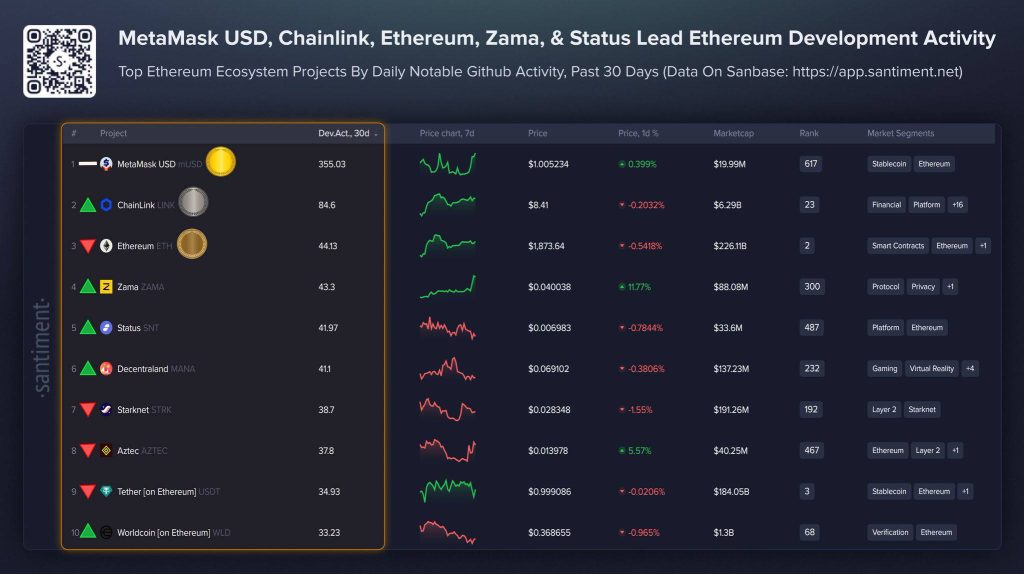
Top 10 Ethereum Ecosystem Projects by Developer Activity: Insights and Analysis
Background and Context
The Ethereum blockchain has long been the backbone of the decentralized application (dApp) ecosystem, attracting developers due to its robust smart contract functionality and expansive community. As of late 2023, the competition among various projects within the Ethereum ecosystem has intensified. The focus on developer activity serves as a crucial indicator of a project’s health and future potential, as active development typically correlates with innovation, upgrades, and overall community engagement.
The recent ranking of the top ten projects by developer activity has brought attention to several noteworthy players. Understanding these projects can provide insights into where the Ethereum ecosystem is heading, especially in the face of growing competition from other blockchains such as Binance Smart Chain and Solana.
Key Data and Metrics
The list of the top ten projects by developer activity includes:
- mUSD
- LINK (Chainlink)
- ETH (Ethereum)
- ZAMA
- SNT (Status Network Token)
- MANA (Decentraland)
- STRK (Strike)
- AZTEC
- USDT (Tether)
- WLD (Worldcoin)
These rankings are based on various metrics, including the number of commits, pull requests, and overall code contributions made by developers. mUSD, a stablecoin that has gained traction recently, tops the list, indicating a growing interest in decentralized finance (DeFi) solutions that prioritize stability.
In contrast, LINK and ETH consistently rank high due to their foundational roles in the Ethereum ecosystem. Chainlink, for example, provides critical off-chain data feeds that enable smart contracts to react to real-world events, thereby increasing its utility and demand among developers.
Market Analysis
The current landscape of the Ethereum ecosystem is characterized by a shift toward greater decentralization and innovation. For instance, ZAMA and AZTEC are emerging projects focusing on privacy solutions, addressing the growing concerns surrounding data privacy in digital transactions. As regulatory scrutiny increases globally, projects that prioritize privacy may see heightened interest and investment.
Decentraland (MANA) continues to evolve as a leader in the metaverse space, with rising engagement metrics reflecting its success in attracting users and developers alike. The integration of real-world utility into virtual environments is a trend that could define the future of digital interaction.
Expert Perspective
Industry experts emphasize the importance of monitoring developer activity as a barometer for project viability. “Active development is a strong signal that a project is not only surviving but thriving,” says a blockchain analyst at a leading crypto research firm. “In a rapidly changing market, the ability to adapt and innovate is crucial for long-term success.”
Moreover, the increasing number of projects focusing on interoperability within the Ethereum ecosystem suggests a collaborative approach to building decentralized applications. This paradigm shift could lead to more integrated solutions that enhance user experience and broaden the scope of dApps.
Risks and Opportunities
While the outlook for these top projects appears optimistic, potential risks must be considered. The volatility of the cryptocurrency market, regulatory changes, and competition from alternative blockchains pose significant challenges. Projects that fail to adapt to these dynamics may struggle to maintain their developer momentum.
Conversely, there are numerous opportunities for growth. As the demand for decentralized finance solutions continues to rise, projects that can innovate and meet user needs will likely flourish. Additionally, the increasing institutional interest in Ethereum-based projects could translate into significant capital inflows, further fueling development.
Future Outlook
Looking ahead, the Ethereum ecosystem is poised for continued evolution. The Ethereum 2.0 upgrade, aimed at enhancing scalability and energy efficiency, is expected to significantly impact developer activity and project growth. As the transition to proof-of-stake progresses, developers are likely to explore new avenues for innovation.
Furthermore, the rise of Layer 2 solutions, such as Optimism and Arbitrum, is reshaping how developers approach scalability and transaction costs. These solutions promise faster transaction speeds and lower fees, making it easier for developers to create user-friendly dApps.
Conclusion
The ranking of the top ten projects by developer activity within the Ethereum ecosystem provides valuable insights into the future direction of blockchain technology. With significant emphasis on innovation, privacy, and user engagement, the Ethereum ecosystem is likely to continue being a driving force in the cryptocurrency market. Investors and traders should closely monitor these projects and their developer activity, as they will play a critical role in shaping the landscape of decentralized applications.
For those interested in navigating these changes, understanding the underlying technology and market dynamics is essential. As we continue to witness the evolution of the Ethereum ecosystem, staying informed will be key to capitalizing on the opportunities that arise.