

Analyzing the Five-Year Investment Performance of Filecoin (FIL)
20.07.2026 10:32
The Future of AI Infrastructure: Lessons from Japan’s Stadiums
20.07.2026 10:36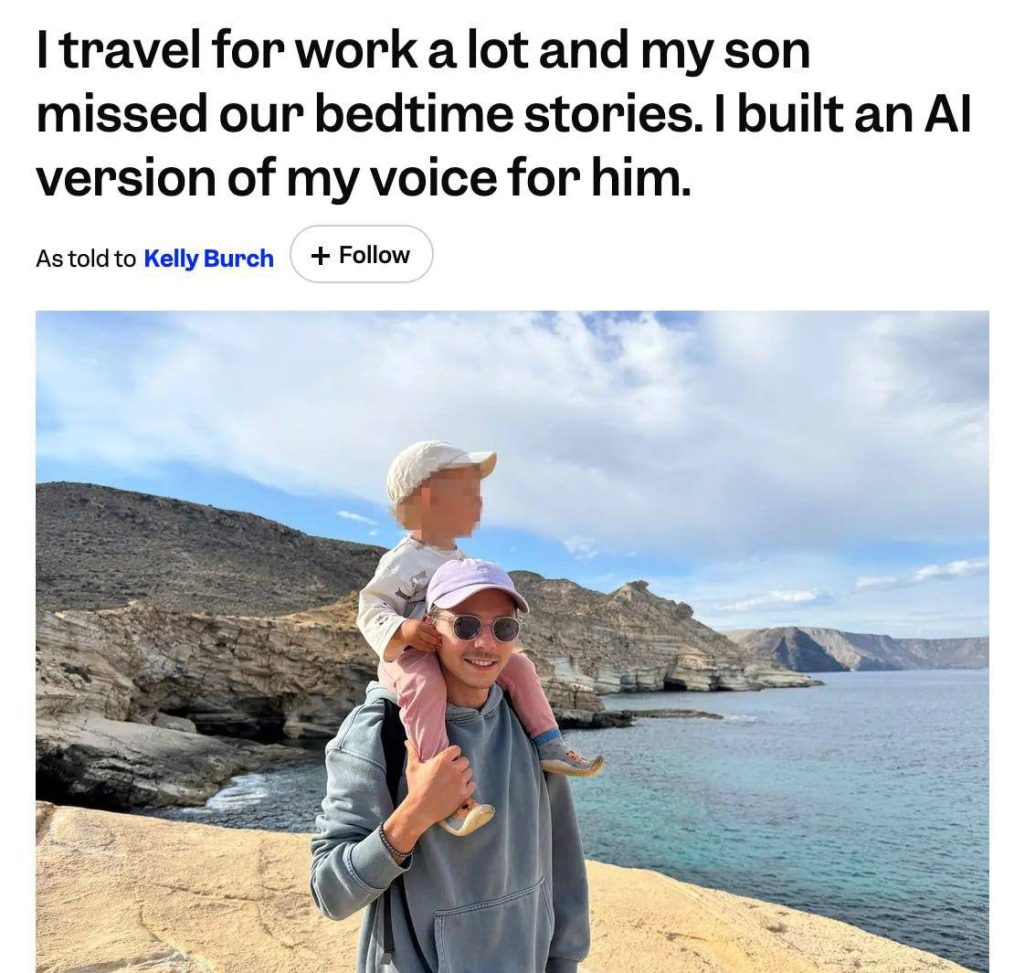
The Rise of AI Storytelling: Exploring the Impact of AI Clones in Modern Parenting
Background and Context
In a remarkable intersection of technology and parenting, a developer has created an AI clone that reads stories to his son. The application utilizes advanced algorithms from platforms like Gemini and ChatGPT, allowing children to select themes and receive generated stories narrated in the voice of their father. This innovation has profound implications for family dynamics and the role of artificial intelligence in everyday life.
Historically, storytelling has been a fundamental aspect of human culture, serving as a medium for education, moral guidance, and entertainment. With the advent of digital technology, the traditional form of storytelling has evolved, leading to new avenues of engagement, particularly for children. The use of AI in storytelling not only caters to the demands of modern parenting but also raises questions about the authenticity and emotional connection between parent and child.
Key Data and Metrics
Notably, the AI clone reportedly passes as the real father in 90% of interactions, highlighting the sophistication of current AI technologies. This statistic is significant because it reflects the advancements in natural language processing and voice synthesis that have occurred in recent years. AI can now produce content that is not only coherent but can also mimic emotional tones and inflections, making it increasingly difficult for users to distinguish between AI-generated and human-created narratives.
This phenomenon is not isolated; it echoes broader trends in the technology landscape. For instance, the rise of virtual assistants like Siri and Alexa, which have become commonplace in households, indicates a growing acceptance of AI in personal spaces. As families increasingly integrate AI into their daily routines, it raises questions about dependency and the potential for AI to supplement traditional roles in parenting and education.
Market Analysis
The market for AI-driven applications is booming, with projections indicating exponential growth in sectors that leverage AI for personalized content creation. According to industry analysts, the AI storytelling market is poised to reach new heights, as parents seek innovative solutions to engage their children. This trend is part of a larger shift towards personalized learning experiences that cater to individual preferences and learning styles.
Moreover, the intersection of AI with education technology is creating new opportunities for startups and established companies alike. As discussed in our Market Insights and Trading Strategies report, the educational technology sector has seen sustained investment, with AI-driven platforms being a focal point for future developments. These applications not only enhance learning but also provide a marketable edge for companies that can offer tailored solutions for families.
Expert Perspectives
Experts in AI and child development have mixed views on the implications of using AI clones for storytelling. Some argue that the emotional bond formed during storytelling is irreplaceable and that AI, while efficient, lacks the innate understanding of human emotions that a parent naturally brings. Others see the potential for AI to enhance the storytelling experience, providing parents with a tool to engage their children in new ways.
As noted in our post, The Emotional Landscape of Trading, emotional intelligence is a critical factor in human interactions. The nuanced understanding that a parent imparts during storytime may not be fully replicable by AI, raising concerns about the implications for children’s emotional development.
Risks and Opportunities
The integration of AI into daily parenting raises important considerations regarding dependency. As these technologies become more prevalent, there is a risk that children may develop a reliance on AI for social interactions and emotional support, potentially impacting their interpersonal skills. Furthermore, the normalization of AI companions could lead to ethical dilemmas around authenticity and the nature of relationships.
Conversely, the opportunities for innovation in this space are vast. Developers can create customized storytelling experiences that adapt to each child’s learning style, interests, and emotional needs. This capability could revolutionize the way parents approach education and entertainment, fostering a more engaging learning environment.
Future Outlook
As we look to the future, the role of AI in parenting is likely to expand. The current trend of AI storytelling is just the tip of the iceberg, as advancements in machine learning and natural language processing continue to evolve. We can expect more sophisticated applications that not only tell stories but also adapt narratives in real-time based on children’s reactions.
This technological evolution presents a unique opportunity for investors and companies to explore new products and services within the AI education sector. The demand for personalized and engaging learning experiences will continue to grow, offering a significant market for innovative solutions.
Conclusion
The development of AI clones for storytelling represents a fascinating convergence of technology and parenting. While there are valid concerns regarding emotional authenticity and dependency, the potential for enhancing children’s learning experiences is substantial. As AI becomes an integral part of daily life, it is essential for parents, educators, and developers to navigate the challenges and opportunities that arise in this new landscape. By striking a balance between technology and human interaction, families can harness the benefits of AI while preserving the invaluable connections that define parenting.