
The Future of Bitcoin: Satoshi’s Vision and the Potential for Algorithmic Evolution
17.07.2026 09:07
Market Turmoil: Understanding the Recent Downturn of Altcoins GRAM and HYPE
17.07.2026 09:31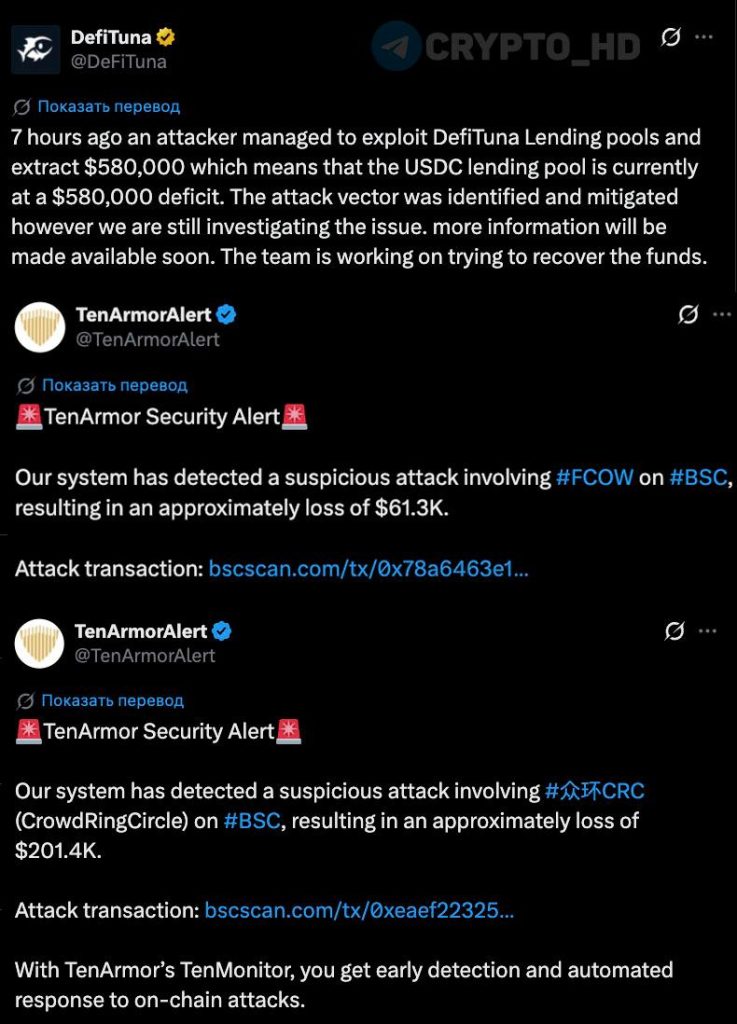
Recent Crypto Hacks: Analyzing the Impact on the Decentralized Finance Ecosystem
Background and Context of Recent Hacks
In the ever-evolving landscape of decentralized finance (DeFi), security breaches have become a significant concern for investors and developers alike. Recently, the DefiTuna protocol suffered a hack resulting in a loss of approximately $580,000, according to reports. In addition, the CrowdRingCircle and FCOW protocols, both operating on the Binance Smart Chain (BSC), were hacked for $201,400 and $61,300 respectively. Such incidents shed light on the vulnerabilities that continue to plague the DeFi space.
With the rapid growth of DeFi platforms, which have seen their total value locked soar to over $100 billion in recent years, the allure of high returns has been matched by an increased risk of hacks and exploits. The lack of regulatory oversight and the nascent nature of smart contracts contribute to these vulnerabilities, making it crucial to understand the implications of such security breaches not just for the affected protocols, but for the entire ecosystem.
Key Data and Metrics on Recent Incidents
According to blockchain analytics, the total value lost to hacks in DeFi in 2023 has already surpassed $1 billion, with the trend showing no signs of abating. Each hack brings into question the security measures employed by protocols and their ability to safeguard users’ funds. The latest breaches at DefiTuna, CrowdRingCircle, and FCOW represent just a fraction of the total losses, but they highlight a growing trend that has serious implications for market confidence.
In a historical context, 2021 saw a staggering $1.3 billion worth of assets stolen from DeFi protocols, with incidents like the Poly Network hack, which resulted in the theft of $610 million, serving as wake-up calls for the industry. As DeFi protocols continue to innovate and attract new users, the necessity for robust security measures and audits has never been more apparent.
Market Analysis of the DeFi Landscape Post-Hacks
The aftermath of these hacks has immediate repercussions for market dynamics. Following the breaches, we can expect a short-term decline in user trust and a potential dip in the total value locked across affected platforms. Investors often react negatively to news of hacks, which can lead to price volatility across tokens associated with the compromised protocols.
However, it is also crucial to contextualize these incidents within the broader market. For instance, following previous hacks, many DeFi projects have implemented enhanced security protocols, leading to greater overall trust in the ecosystem over time. The market has historically shown resilience in bouncing back from such events, as seen after the major hacks in 2021.
Expert Perspectives on Security in DeFi
Leading experts in the blockchain security space argue that the responsibility for security does not solely lie with the protocols but also with the users themselves. Investors are urged to conduct thorough due diligence before engaging with any DeFi project. This includes understanding the underlying technology, reading smart contract audits, and being aware of the risks involved.
Moreover, experts emphasize the importance of ongoing education in the crypto space. As DeFi continues to grow, so too must the understanding of its risks. As discussed in our current liquidation landscape for BTC and ETH, awareness can significantly mitigate risks associated with trading and investment.
Risks and Opportunities for Investors
While the risks of investing in DeFi are pronounced, the potential rewards are equally compelling. For investors willing to navigate the complexities of the market, opportunities for high yields and innovative financial products are abundant. However, this requires a keen understanding of security protocols and a willingness to adapt to new developments.
The recent hacks serve as a crucial reminder of the need for continuous vigilance. In light of these events, investors may wish to diversify their portfolios, incorporating a mix of established protocols with proven track records alongside newer, high-risk options. The impact of external factors such as regulatory changes and market sentiment must also be considered.
Future Outlook: Strengthening Security in DeFi
The future of DeFi hinges on the industry’s ability to address security concerns effectively. As hacks become more prevalent, the implementation of stringent security measures, such as multi-signature wallets, insurance protocols, and regular audits, will be paramount. Projects that prioritize security will likely gain a competitive edge in attracting users and capital.
Moreover, the development of insurance products for DeFi investments is on the rise, offering a safety net for investors. This burgeoning market segment could potentially mitigate risks associated with hacks, leading to a more stable investment environment. As discussed in our analysis of Bitcoin options expiry, the interplay between insurance and protocol robustness will be crucial as DeFi matures.
Conclusion: Navigating the DeFi Landscape Amidst Security Challenges
As the DeFi landscape continues to evolve, the recent hacks at DefiTuna, CrowdRingCircle, and FCOW serve as critical reminders of the inherent risks within this innovative financial sector. While these breaches pose immediate challenges, they also present opportunities for growth and improvement. Investors and developers must remain vigilant, continually adapting to the changing security landscape.
Education, security practices, and a proactive approach will be essential for the future of DeFi. As the industry works to reinforce its defenses, the potential for sustainable growth remains high, making it an intriguing space for both new and seasoned investors. For those looking to invest in a secure and evolving ecosystem, platforms that prioritize security, like those discussed in our A16z’s recent market moves, are likely to be the most promising in the coming years.