

A16z Begins Selling HYPE: Market Implications and Future Outlook
17.07.2026 08:35
Recent Crypto Hacks: Analyzing the Impact on the Decentralized Finance Ecosystem
17.07.2026 09:14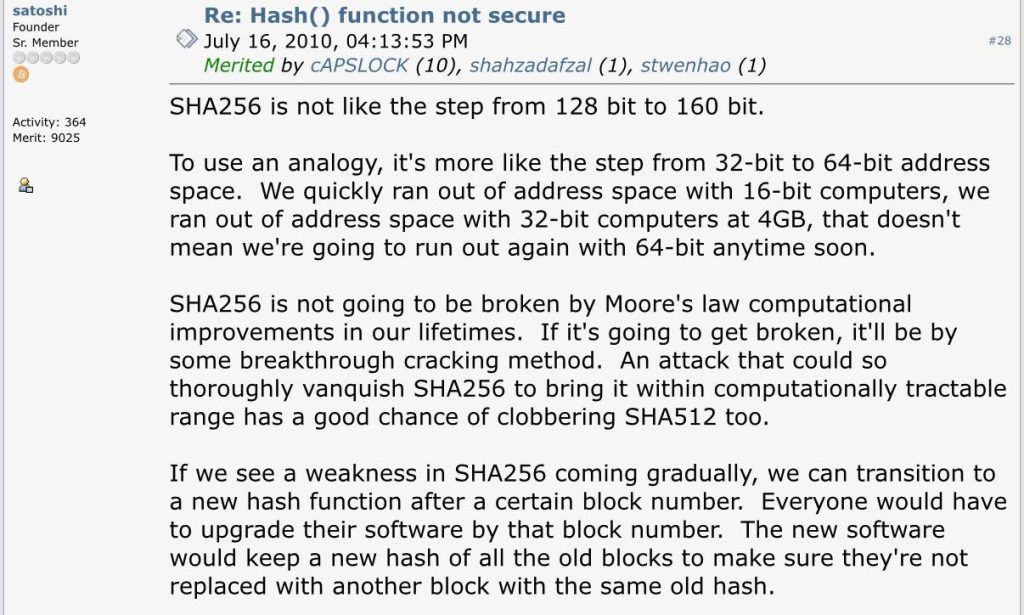
The Future of Bitcoin: Satoshi’s Vision and the Potential for Algorithmic Evolution
Background and Historical Context
Bitcoin, introduced in 2009 by the pseudonymous Satoshi Nakamoto, was designed to be a decentralized digital currency with a robust security model. In a notable post on the BitcoinTalk forum from 2010, Satoshi discussed the potential for algorithmic updates should the existing security mechanisms become vulnerable. This foresight indicates that the foundational principles of Bitcoin were intended to be adaptive, allowing for an upgrade to a new algorithm if necessary, well before the current concerns surrounding quantum computing emerged.
Understanding Satoshi’s vision is crucial for grasping the long-term sustainability of Bitcoin as a financial asset. The cryptocurrency has undergone several upgrades since its inception, each aimed at enhancing security and scalability. The foresight of a potential shift to a new algorithm underscores a key feature of Bitcoin: its capacity for evolution in response to technological advancements and threats.
Key Data and Metrics on Bitcoin’s Security
Bitcoin’s security primarily relies on its proof-of-work consensus mechanism, which requires miners to solve complex mathematical problems to validate transactions. As of October 2023, Bitcoin’s network hash rate has reached an all-time high of approximately 400 EH/s (exahashes per second), showcasing the tremendous computational power dedicated to securing the network. This level of investment in mining infrastructure suggests that, for now, Bitcoin remains secure against traditional threats.
However, the looming threat of quantum computing raises concerns among experts. Current cryptographic techniques used in Bitcoin, such as SHA-256 and ECDSA (Elliptic Curve Digital Signature Algorithm), could potentially be compromised by sufficiently advanced quantum computers. While practical quantum computers capable of breaking these algorithms are still in the theoretical stage, researchers estimate that a quantum computer with around 4,000 logical qubits could break Bitcoin’s security. This has led to discussions about the need for a “quantum shield” for Bitcoin, an upgrade that would transition the network to quantum-resistant algorithms.
Market Analysis: Implications of Quantum Threats
The conversation around Bitcoin’s potential quantum vulnerability has significant implications for market dynamics. As fear of quantum disruption increases, investors may start to reassess their exposure to Bitcoin. Historical data indicates that technological advancements often trigger market shifts; for instance, following the announcement of Ethereum’s transition to proof-of-stake, Bitcoin experienced increased volatility.
Furthermore, the response from Bitcoin’s community and developers will play a crucial role in determining market sentiment. If the community demonstrates a proactive approach to addressing quantum threats, it could bolster confidence in Bitcoin’s longevity. Conversely, any perceived inaction may lead to increased selling pressure as investors seek alternatives. The market’s reaction will likely hinge on the timing and effectiveness of any proposed solutions to enhance Bitcoin’s security.
Expert Perspectives on Bitcoin’s Future
Experts have varying opinions on the implications of quantum computing for Bitcoin. Some argue that the current level of threat is overstated, pointing out that practical quantum computers are still years away from being a reality. Others, however, emphasize the importance of preparing for potential vulnerabilities before they become critical. Notably, Barry Silbert, CEO of Digital Currency Group, has stated that understanding the fundamentals of Bitcoin’s security will be vital for future investors.
Additionally, the development of alternative cryptocurrencies that are built with quantum resistance in mind could create a competitive landscape. Projects such as Quantum Resistant Ledger (QRL) aim to address these issues directly, potentially drawing investment away from Bitcoin if it cannot adapt quickly enough. This highlights the need for Bitcoin to remain agile and responsive to evolving threats in the cryptographic landscape.
Risks and Opportunities in the Evolving Crypto Landscape
As the cryptocurrency market continues to mature, the risks associated with quantum computing will likely become a focal point for both investors and developers. The uncertainty surrounding Bitcoin’s future security may deter some investors, particularly those new to the space. However, this situation also presents opportunities for innovation within the ecosystem. Developers and researchers are already working on solutions to enhance Bitcoin’s cryptographic resilience, which could lead to a new wave of technological advancements.
Furthermore, the introduction of a quantum-resistant Bitcoin could enhance its appeal to institutional investors. As companies and funds increasingly allocate capital to cryptocurrencies, demonstrating a commitment to security and adaptability could position Bitcoin favorably in the competitive landscape. This could potentially lead to a resurgence in institutional interest and investment, further solidifying Bitcoin’s status as a digital gold.
Future Outlook: Navigating the Quantum Landscape
Looking ahead, the future of Bitcoin will depend on its ability to adapt to emerging threats, particularly from quantum computing. The cryptocurrency space is characterized by rapid technological advancements, and Bitcoin’s developers must prioritize the development of quantum-resistant algorithms. The timeline for this adaptation remains uncertain, but proactive measures will be essential in maintaining confidence among users and investors.
Moreover, the broader implications of quantum computing extend beyond Bitcoin. The entire cryptocurrency market may need to reassess its security protocols in light of these developments. The next few years will be critical in shaping the strategies that cryptocurrencies adopt to remain secure in a quantum future.
Conclusion: Satoshi’s Legacy and the Path Forward
Satoshi Nakamoto’s foresight in preparing for potential security vulnerabilities serves as a reminder of Bitcoin’s foundational principles. As the threat of quantum computing looms closer, the community’s response will determine Bitcoin’s resilience and adaptability. By embracing innovation and prioritizing security, Bitcoin can continue to thrive in an ever-evolving digital landscape. Investors should remain informed about these developments, as they will play a significant role in shaping the future trajectory of Bitcoin and the broader cryptocurrency market.
For more insights on the evolving landscape of Bitcoin and strategies for navigating its complexities, explore our articles like A16z Begins Selling HYPE and Current Liquidation Landscape for BTC and ETH. Additionally, keep an eye on upcoming trends that may influence investor behavior, as discussed in Larry Fink’s insights on Bitcoin and the global market outlook.