
Bitcoin ETF Approval: A Turning Point for Crypto Investment
16.07.2026 13:50
Bitcoin ETF Approval: A Catalyst for the Next Price Rally?
16.07.2026 13:59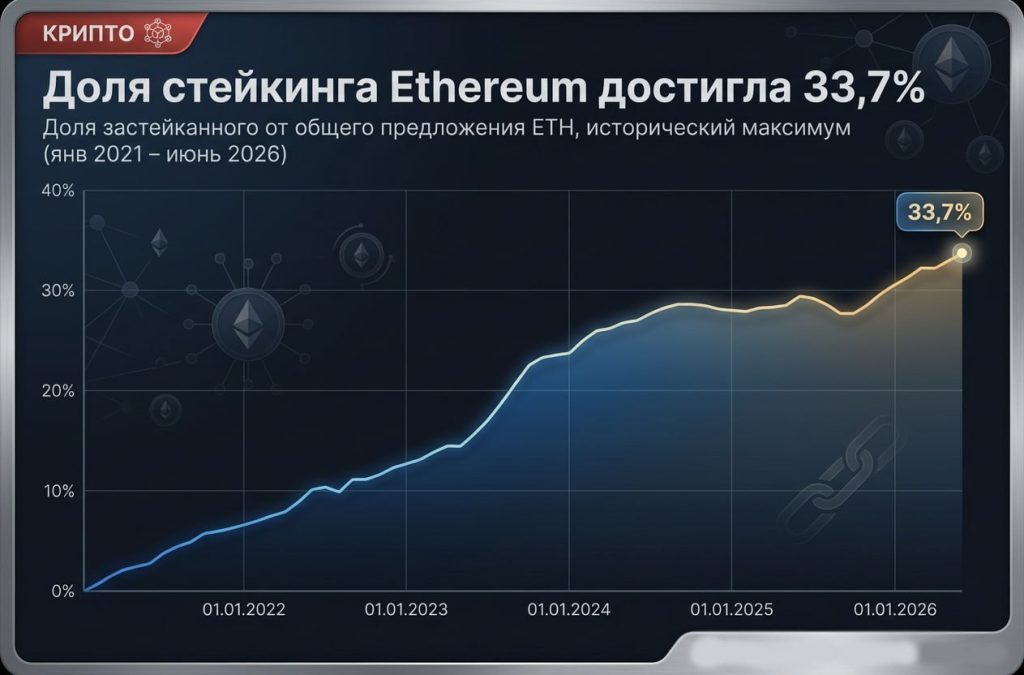
Ethereum Staking Reaches 33.7%: A Deep Dive into the Market Dynamics
Background and Context
The Ethereum blockchain has seen a significant evolution since its inception, particularly with the transition to proof-of-stake (PoS) through the Ethereum 2.0 upgrade. This transition has altered the landscape of how Ethereum is utilized, with staking becoming a prominent method for holders to earn rewards. As of now, approximately 33.7% of all Ethereum (ETH) is staked, indicating a shift in investor sentiment towards a more long-term outlook. This change is not merely a trend; it reflects a broader confidence in the Ethereum network’s potential for growth and stability.
Historically, Ethereum has been a favorite among investors, largely due to its smart contract capabilities. However, the staking mechanism introduces a new dimension to its appeal. Unlike traditional holding methods, staking allows investors to contribute to network security while simultaneously earning rewards. This dual benefit has become increasingly attractive, especially in a market where passive income strategies are gaining traction.
Key Data and Metrics
The current staking figure of 33.7% represents a notable increase compared to previous years. For instance, just a year ago, the staking percentage hovered around 25%. This uptick underscores a growing belief in Ethereum’s future, particularly as the network continues to address scalability and security issues. With over 13 million ETH currently staked, the implications for market dynamics are profound.
Additionally, the reduced circulating supply due to staking means that less ETH is available for trading, which can exert upward pressure on prices. The correlation between staking levels and price movements is crucial for traders to understand. As liquidity decreases, the potential for significant price fluctuations increases, making timing and strategy even more critical for those involved in the market.
Market Analysis
Analyzing the current market conditions reveals that Ethereum’s price has responded positively to the increasing staking activity. As seen in the recent Bitcoin ETF analysis, the overall sentiment in the crypto market tends to align with staking trends. As Ethereum continues to demonstrate resilience, it has become a focal point for both retail and institutional investors.
Moreover, this trend indicates a growing interest in decentralized finance (DeFi) applications built on the Ethereum network. The integration of staking mechanisms within these platforms further enhances the ecosystem, providing users with diverse opportunities for earning and investment. The synergy between Ethereum’s staking and its DeFi applications presents a compelling case for future growth.
Expert Perspective
Industry experts predict that the upward trend in staking will continue as more investors recognize the benefits of locking up their assets for longer periods. Analysts highlight that this behavior is indicative of a maturing market, where investors are less driven by short-term gains and more focused on sustainable growth. The increased staking activity could also be a strategic move in anticipation of potential future upgrades to the Ethereum protocol, which may further enhance its utility.
Furthermore, as Ethereum’s ecosystem expands, the demand for staking is likely to increase. With new projects launching on the network, there is a growing likelihood that more ETH will be staked to support these initiatives. This trend aligns with the broader movement towards greater decentralization and user empowerment within the cryptocurrency space.
Risks and Opportunities
While the growth of staking presents numerous opportunities, it is essential to consider the associated risks. One of the primary concerns is the potential for market volatility as staked assets cannot be easily liquidated. In times of market downturns, investors may find themselves unable to access their funds, which could lead to panic selling among those who are unprepared.
Moreover, the staking process itself is not without its technical challenges. Investors must ensure they understand the mechanics of staking, including the risks of slashing, which can result in the loss of staked assets due to validator misconduct. Educating investors about these risks is crucial for fostering a robust staking environment.
Future Outlook
Looking ahead, the Ethereum staking landscape appears poised for further growth. As the network continues to evolve, enhancements like sharding and layer 2 solutions are expected to improve scalability and reduce transaction costs. These advancements will likely attract even more users to the staking ecosystem, bolstering confidence in Ethereum’s long-term viability.
Additionally, regulatory clarity surrounding staking and cryptocurrencies as a whole will play a significant role in shaping investor behavior. As governments and regulatory bodies establish frameworks for digital assets, the legitimacy of staking will likely increase, encouraging more participants to join the market.
Conclusion
The surge in Ethereum staking to 33.7% marks a pivotal moment in the cryptocurrency landscape. This shift reflects a growing confidence among investors and highlights the evolving nature of Ethereum as a leading blockchain platform. As more ETH is staked, the implications for supply, demand, and price dynamics become increasingly significant.
For traders and investors, understanding the stakes involved in Ethereum’s staking landscape is crucial. The interplay between staking, market sentiment, and regulatory developments will likely define the future trajectory of Ethereum and its position within the broader crypto ecosystem. As we move forward, staying informed about these trends will be essential for making strategic investment decisions.