The Wisdom of Restraint: Applying Warren Buffett’s Principles to Crypto Investing | MEXC Analysis
08.07.2026 00:19
🐋 ETH Whale Accumulation Alert: Decoding Institutional Conviction in Ethereum | MEXC Analysis
08.07.2026 01:14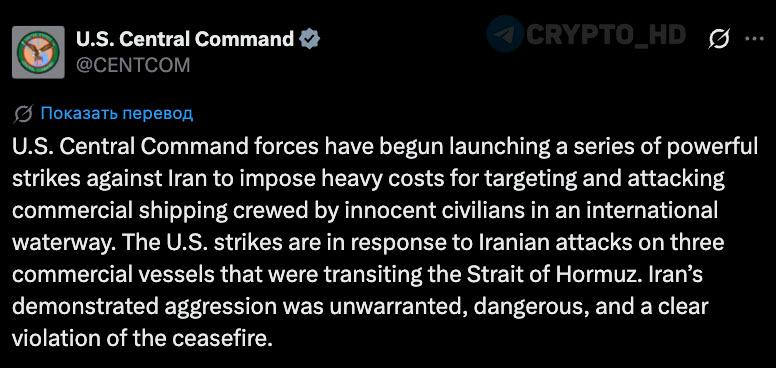
Geopolitical Risk Alert: How Escalating Tensions in the Strait of Hormuz Impact Crypto Volatility and Investment Strategy
The global financial system is constantly exposed to unpredictable risks, and nothing illustrates this better than the escalating geopolitical tensions in the Middle East. Recent reports detailing military strikes by US Central Command (CENTCOM) against Iran following alleged attacks on commercial vessels in the Strait of Hormuz serve as a stark reminder that macro-economic stability is fragile. When major commodity supply lines are threatened, the ripple effects cascade across all asset classes, including cryptocurrencies.
This analysis examines how geopolitical instability, exemplified by potential disruptions to crude oil flow, impacts market sentiment and what structural principles should guide your investment strategy during times of global flux.
The Direct Impact: Oil Price Spikes and Market Correlation
The Strait of Hormuz is vital because it handles a massive percentage of the world’s seaborne oil trade. Any disruption here immediately threatens supply, causing crude oil prices (like Brent and WTI) to spike dramatically. Historically, such commodity shocks lead to global economic uncertainty, which in turn causes capital flight and increased volatility across financial markets.
While cryptocurrencies are often touted as a hedge against traditional fiat currency risk, they are not immune to macro-economic shockwaves. When the real economy faces supply constraints or geopolitical conflict, investors tend to panic, leading to indiscriminate selling pressure that can affect even the most resilient digital assets. This is why understanding how external factors—like oil price volatility—translate into crypto market movements is crucial for survival.
The Crypto Strategy: Decoupling from Commodity Cycles
In a crisis scenario, many traders revert to simple correlation models (e.g., “Oil up means BTC up”). However, the most sophisticated investors understand that while macro events create volatility, they do not dictate the underlying structural value of digital assets.
The key is recognizing the difference between temporary panic selling and fundamental structural support:
- Institutional Conviction: During periods of extreme global uncertainty, institutional capital tends to flow into assets with proven long-term utility and scarcity. The continued accumulation by major financial players like BlackRock in BTC and ETH demonstrates a deep, underlying belief that digital assets are fundamentally decoupled from the day-to-day commodity cycles. For a detailed look at this structural strength, review BlackRock’s Massive BTC & ETH Accumulation Signals Institutional Conviction.
- Structural Scarcity: The continuous deflationary forces at play, such as the massive burning of stablecoins on Ethereum, create a powerful structural scarcity that acts as an invisible floor for the entire ecosystem. This foundational support helps stabilize prices even when external commodity markets are in chaos. Learn more about this process here: The Deflationary Force: Analyzing Tether’s Massive USDT Burn…
- Regulatory Clarity: Geopolitical risk also accelerates the need for regulatory clarity. The US government’s push to establish itself as a global crypto capital, alongside pioneering efforts in regions like Belarus, signals that governments view digital assets not as speculative toys, but as essential components of future finance. Understanding this macro shift is vital: The SEC’s Grand Strategy: How the US Plans to Become the Global Crypto Capital.
Navigating Volatility with Discipline
When geopolitical tensions spike, the most dangerous emotion is panic. The market can be whipsawed by headlines, leading to extreme volatility and potential flash crashes—as seen in other markets when supply chains break down. Therefore, the single most important tool a trader possesses is risk management.
A macro warning like this must trigger caution, not impulsive action. Always remember that every major crash or spike has taught us one thing: discipline. For a comprehensive guide on surviving these volatile cycles and protecting your capital, read The Danger of Hype Cycles: Analyzing the TON Ecosystem Token Crash and Crypto Risk Management.
Current Market Snapshot & Strategic Takeaways
As of today, Bitcoin is trading at 63365.48 USDT, showing a slight dip (-1.27%) amidst global commodity concerns. This price action reflects the immediate market sensitivity to geopolitical risk. However, the long-term structural indicators—institutional accumulation and deflationary scarcity—suggest that while short-term volatility is high, the foundational value remains robust.
For Traders: Actionable Steps in a Crisis:
- De-Risk Your Portfolio: During periods of extreme macro uncertainty, reduce highly speculative altcoin exposure and focus on core assets (BTC/ETH).
- Focus on Fundamentals: Base your investment thesis not on headlines, but on structural pillars like institutional demand and technological utility.
- Prioritize Security & Compliance: The global push for regulation means that using compliant, secure platforms is non-negotiable: The Rise of Crypto Compliance: Why AML Checks Are Non-Negotiable for Modern Digital Assets.
To participate in this high-stakes, global crypto market with unparalleled liquidity and advanced trading tools, access to a world-class exchange is non-negotiable:
🔗 Trade with Confidence on MEXC: MEXC Referral Link
*Source Material:* Synthesis of reports from Axios, major commodity trading houses, and global economic analysis regarding the Strait of Hormuz crisis.