

The AI Leap: Decoding Compressed Thought Processes in LLMs and Its Impact on Crypto | MEXC Analysis
07.07.2026 12:51The Deflationary Force: Analyzing Tether’s Massive USDT Burn on Ethereum and Its Impact on Crypto Stability | MEXC Analysis
07.07.2026 13:09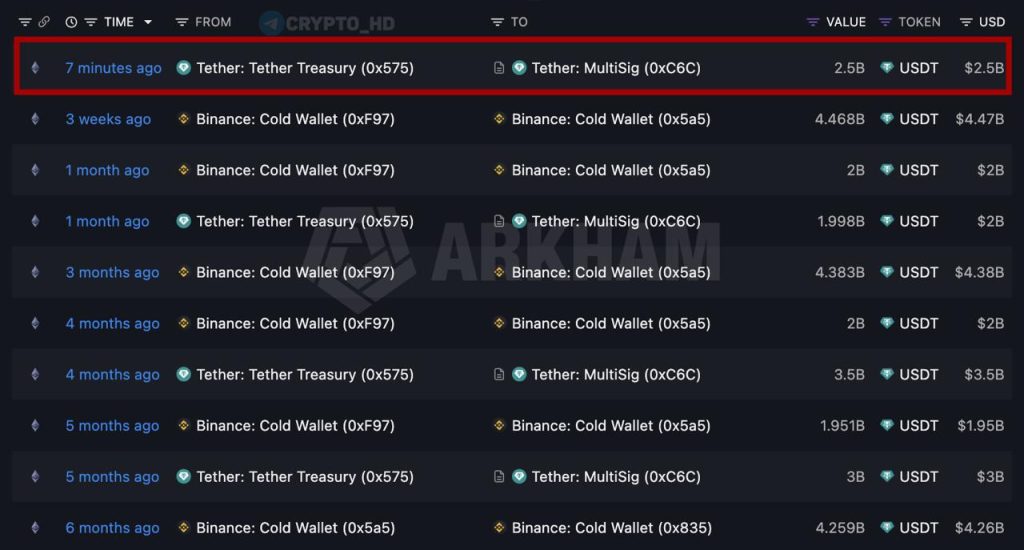
The Deflationary Force: Analyzing Tether’s Massive USDT Burn on Ethereum and Its Impact on Crypto Stability
The cryptocurrency market is constantly monitoring supply dynamics, as these factors often dictate the perceived value and stability of major assets. Recently, a massive event captured the attention of analysts: Tether (USDT) burned an estimated 2.5 billion USDT directly on the Ethereum network. This significant act of supply reduction—a deflationary mechanism—is being closely watched by investors globally, as it signals both confidence in the underlying asset and a commitment to maintaining stable value within the crypto ecosystem.
What Does Burning USDT Mean for Crypto Stability?
In simple terms, when Tether burns its own tokens, it is permanently removing them from circulation. This action directly reduces the total supply of USDT on the Ethereum blockchain. From an economic standpoint, reducing the supply of a major stablecoin like USDT has several profound implications:
- Deflationary Pressure: A shrinking supply inherently increases scarcity. If demand remains constant or grows, the reduced supply puts upward pressure on the asset’s value and stability.
- Confidence Signal: Such large-scale burns are often interpreted as a sign of institutional confidence. It suggests that Tether views its own token as having sufficient long-term utility and value to warrant permanent removal from circulation, reinforcing trust in the stablecoin itself.
This focus on supply management is critical for understanding how major financial players maintain stability. For those interested in seeing how global institutions manage their assets and capital flows, read The Macro-Crypto Nexus: Decoding Institutional Moves Amid Global Economic Shifts.
The Role of Stablecoins in the Crypto Ecosystem
Stablecoins like USDT are foundational pillars of the entire crypto market. They provide a necessary bridge between volatile digital assets (like Bitcoin) and traditional fiat currencies. Their stability allows traders to enter, exit, or hold capital without being exposed to extreme price swings. The continuous effort by issuers to manage supply—whether through burns or minting—is what keeps this crucial financial plumbing running smoothly.
The burning of 2.5 billion USDT is not just a technical event; it’s a powerful narrative point about the maturity and permanence of stable assets in the global finance landscape. This theme of institutional adoption and structural value is mirrored by other major capital movements, such as BlackRock’s Massive BTC & ETH Accumulation Signals Institutional Conviction.
Connecting Supply Dynamics to Bitcoin’s Value
While the burn event focuses on USDT, it draws attention back to the core asset: Bitcoin (BTC). The stability provided by major stablecoins is what allows traders to accumulate and hold volatile assets like BTC. When capital flows are robust—driven by both institutional accumulation and reliable settlement layers—the underlying value of decentralized digital gold remains strong.
The current market data shows that Bitcoin is trading at **63,312.87 USDT**, demonstrating resilience despite the constant flux in stablecoin supply dynamics. This stability confirms BTC’s position as a primary global reserve asset. To understand how this structural value is maintained even during periods of high volatility and institutional selling, review Bitcoin’s Strategic Cycle: Analyzing Michael Saylor’s Pattern of Sales for Corporate Needs.
Strategic Takeaways for Traders
For traders, the key takeaway from this burn event is to view supply dynamics as a fundamental indicator of market health. Large, irreversible actions like burning billions of dollars in tokens signal deep commitment and confidence from issuers. This contrasts sharply with short-term hype cycles or speculative trading.
Always remember that no single event defines the entire market. A comprehensive understanding requires looking at multiple vectors: institutional accumulation, technological adoption (like RWA), and supply management. To safeguard your capital against misleading signals and volatile trends, mastering risk management is absolutely crucial. We highly recommend reading The Danger of Paid Crypto Trading Signals: A Guide to Risk Management.
Conclusion & Call to Action
Tether’s massive burn is a powerful reminder that the crypto market is maturing into a sophisticated financial system where supply and demand are managed with institutional precision. The stability provided by these assets, combined with the structural strength of Bitcoin, solidifies its role as a global reserve currency.
To participate in this robust and expanding cross-asset market with confidence, you need access to a world-class exchange that supports global trading pairs:
🔗 Trade with Confidence on MEXC: MEXC Referral Link
*Source Material:* Crypto Headlines report detailing the USDT burn event, cross-referenced with general market analysis on stablecoin supply dynamics.
Tags: Tether, Stablecoins, Deflationary, Ethereum, Bitcoin, MEXC